Free Palestine: British-based Solidarities with the Palestinian Revolution
Free Palestine: British-based Solidarities with the Palestinian Revolution
Presented by
Archival Sources
University of Exeter's Middle East collections
Last Updated
This tool is intermittently updated to integrate new information sent to the authors.
5 November 2025
Free Palestine (April 1974)
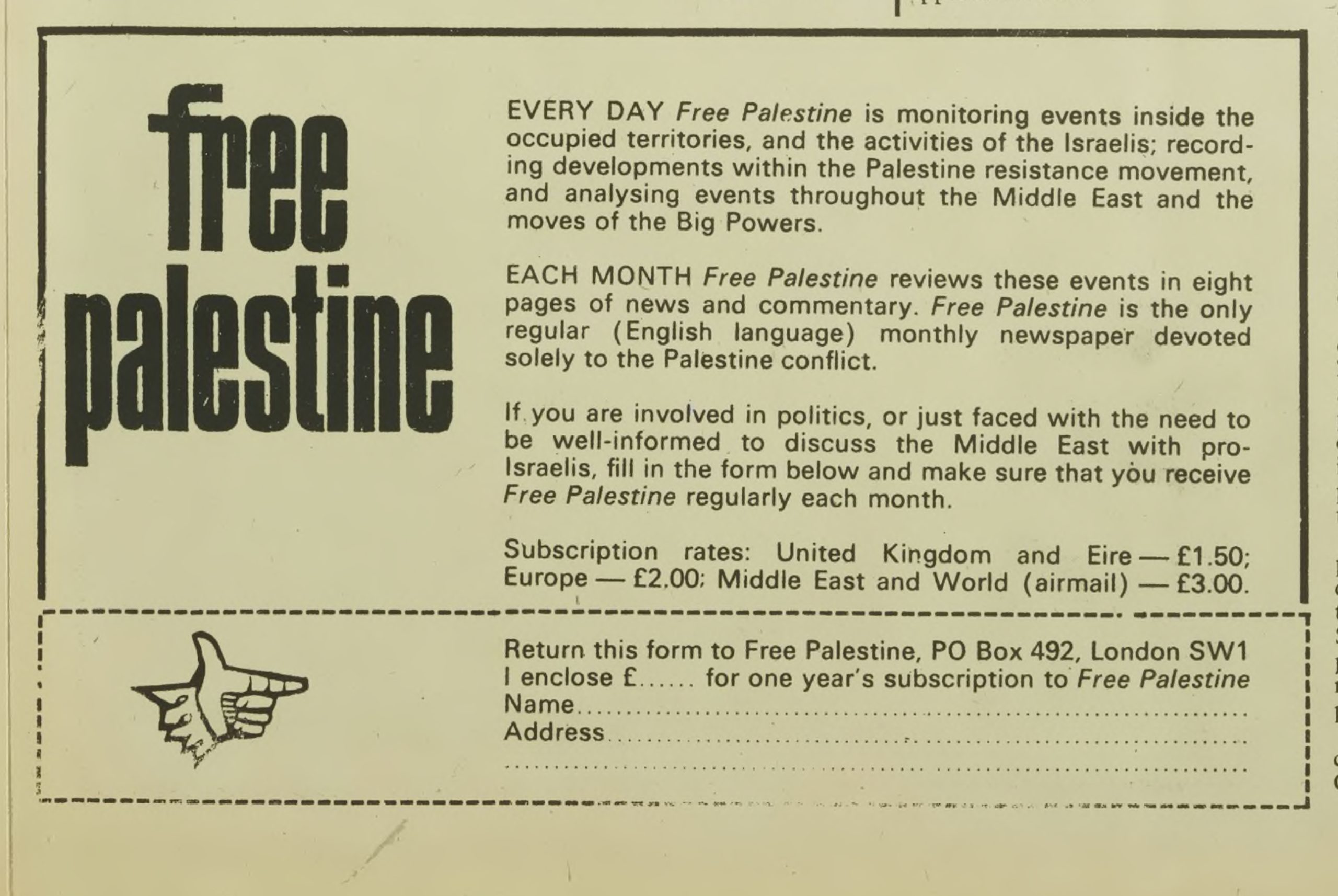
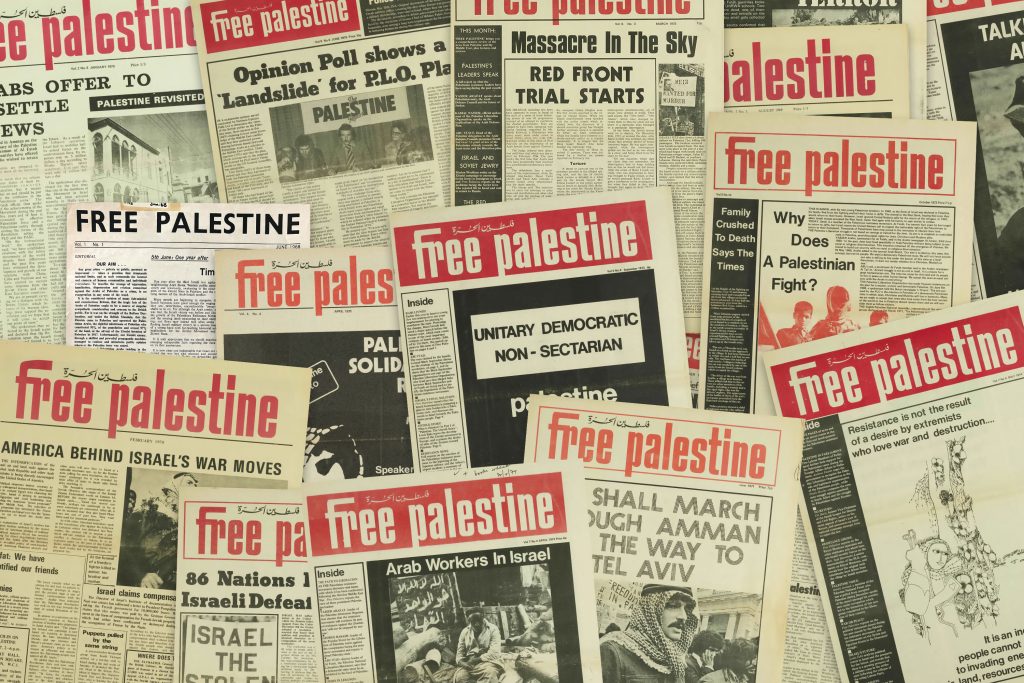
Free Palestine was a monthly magazine published in Britain from 1968 until 1984, after which it moved to Australia from where it continued publication until 1992. The magazine, little known by activists or scholars today, is effectively an archive of the Palestine solidarity movement in Britain during the years of its publication, and contains a treasure trove of information, experiences, tactics and strategies used by British-based activists in building solidarity with Palestine.
In the midst of an unspeakable genocide being committed against the people of Palestine, this teaching tool aims to retreive the lessons contained within Free Palestine’s pages and explore its significance for the current struggle against Israeli colonisation, Apartheid and murder.
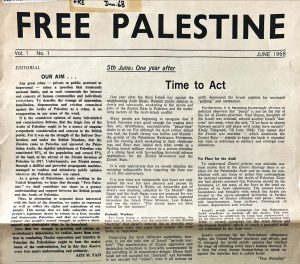
The first issue of Free Palestine was published June 1968 and featured an editorial outlining its aims and positions:
As a group of Palestinian Arabs residing in the UK, we hope that through ‘Free Palestine’ we shall contribute our share to a greater understanding and rapport between the British people and the Arabs of Palestine. Thus, in attempting to acquaint those interested with the facts of the situation, we aspire to represent as well as reflect the rights and aspirations of our people. This means we fully subscribe to our people’s legitimate desire to return to a free, secular and democratic Palestine, and that we unreservedly support our people’s armed struggle to achieve these natural and elementary aims in its homeland.
Free Palestine (June 1968)
This editorial was written by Dr. Abdul Wahab Al-Kayali who was a PhD student at University College London, pen-name ‘Aziz M. Yafi’, a founder of the paper and its editor in chief until 1969. Al-Kayali went on to head the Education and Cultural Affairs Department of the PLO Executive Committee from 1973. His pen-name continued to appear regularly in the magazine as a contributor to the sections ‘Palestine Brief’ and ‘Palestine in the Western Press’, and as a pseudonym for subsequent editors, until he was assassinated in his Beirut office on 7 December 1982. Over the course of its publication, the magazine had several other named editors from various sections of the growing movement of solidarity with Palestine in Britain. This included Ghayth Armanazi, editor from 1969-70, then a Fatah member studying in London and founder of the activist group Friends of Palestine; Louis Eakes, editor from 1970-74, a national organiser of the Young Liberals and closely affiliated with Palestine Action (a campaign group formed in 1973 by Palestinian doctor Ghada Karmi that lasted until the late 1970s); and Andrew Faulds (announced as a member of the editorial board in 1981), a Labour MP (1966–1997) and president of Palestine Action.
The paper covers the Palestine solidarity movement in Britain and elsewhere at a time when it was growing in reach and resonance across the world. Palestinian resistance organisations took control of the Palestine Liberation Organisation (PLO) after the Arab defeat in the June 1967 War, and transformed it into a national umbrella organisation for the liberation of Palestine through armed struggle. These resistance organisations were inspired by and built networks with fraternal anticolonial and socialist struggles in Algeria, Vietnam, Cuba, China and elsewhere. They, as well as Palestinian unions of women, students, workers, artists and more, engaged in a widespread solidarity-building campaign in order to transform the position of Palestine on the global stage. Integral to this was communicating the aims, strategies, histories and visions of Palestinian liberation to the world.
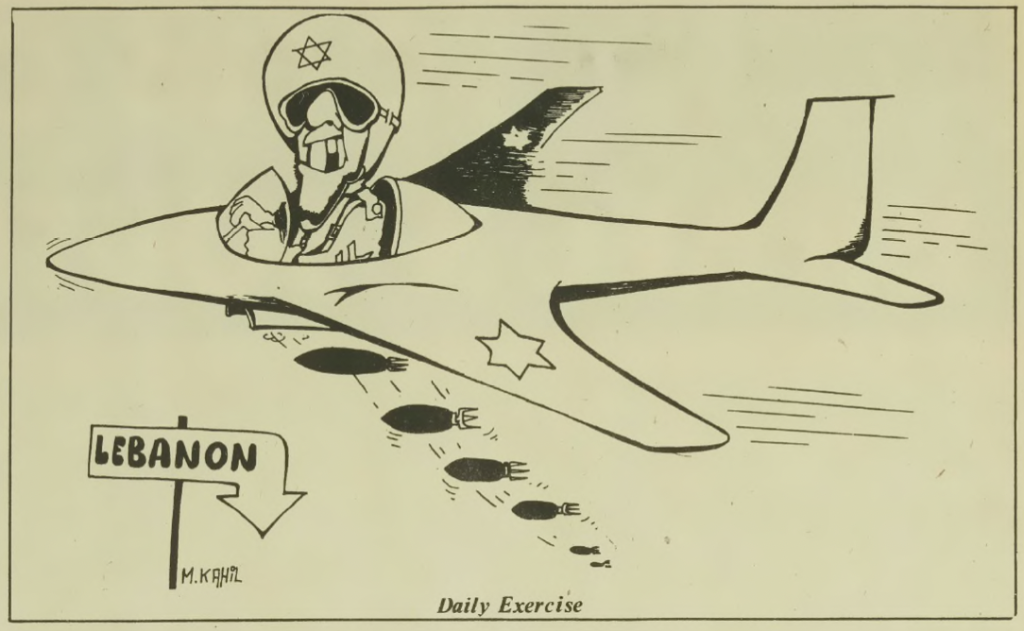
Free Palestine (October 1972)
Free Palestine is both an example of how that communication took place through such publications, and a documentation of the wide range of other solidarity-building activities during those years. The paper includes reports on the situation of Palestinians in Palestine and in exile, the crimes of the Israeli occupation, the activities of the Palestinian liberation movement, exclusive interviews with Palestinian leaders, letters and questions from the Free Palestine readership, media analysis, educational materials, reports on conferences, summer camps, and delegations, and coverage of connections with other internationalist struggles for liberation. As well as working to spread information and mobilise support through the paper, the team behind the publication participated in speaking tours, demonstrations and lobbying alongside other organisations and individuals in the UK who were committed to the principles of Palestinian liberation.
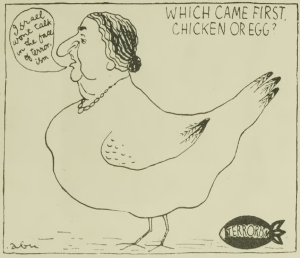
Free Palestine (January 1973)
This teaching tool focuses on the insight offered by this publication to the emergence, dynamics and principles of the Palestine solidarity movement in Britain. More than a marginal publication among the booming Left publishing scene of the late 1960s and 1970s, this magazine played an important role in documenting and shaping the emergence of an international conversation and organisational framework around questions of solidarity with Palestine. It had a significant circulation, from student groups to parliamentary networks, and maintained a monthly regularity over more than fifteen years despite the financial and political challenges it faced.
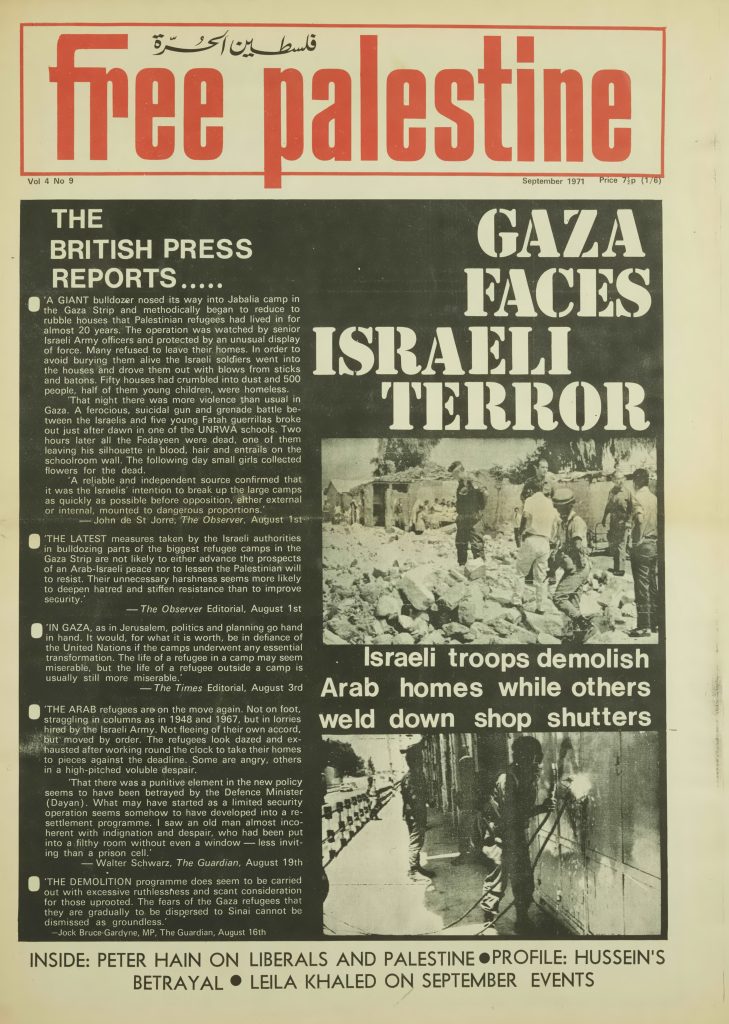
Free Palestine cover (September 1971).
The teaching tool highlights some of the key figures and themes that emerged from this magazine over that time, and is intended as a primer to alert researchers to the publication and the rich history of international solidarity that it documents. This resource provides an outline of the magazine’s role and influence, and key themes in it, over the following five sections:
1) An outline of the organisational landscape of pro-Palestine solidarity work in Britain, the context in which the magazine emerged and the role it played in integrating the diverse strands of the movement.
2) A summary of tactics and actions used in building solidarity with Palestine, utilised across different pro-Palestine solidarity groups, including conferences, boycotts and actions.
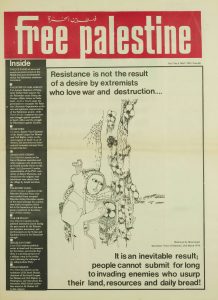
Free Palestine (May 1974).
3) A documentation of the internationalist themes in the paper, and the connection made between international anticolonial struggles and the Palestine liberation movement.
4) A record of different efforts by Zionist organisations to and the British state to silence and suppress pro-Palestine activism.
5) Finally, the resource looks specifically at the trajectory of efforts to build solidarity within the British trade union movement and in Parliament, documenting the early efforts by the Palestinian Revolution to gain some traction amongst these sectors.
Free Palestine (May 1974).
For those unacquainted with the Palestinian struggle over this period, there is much in Free Palestine that they will find striking. Beyond scholarly interest, studying the paper also provides important lessons for those engaged in organising for Palestine in Britain today. Its pages provide an insight into the longer-term nature of political struggle for Palestine and how organising efforts can accumulate to provide frameworks on which subsequent generations of organisers can build. Alternatively, they also show how the same battles are often fought and refought over generations. In either case, the paper makes available a wealth of experience and tactics for building solidarity with Palestine and protecting public space, whilst also reinforcing the multigenerational impact of political work. What also stands out is the sheer variety of tactics and strategies employed by organisers in making the case for Palestine in different arenas and amongst different sectors, rather than being limited to any single approach.
Such reflections are more important now than ever. As Palestinians face an Israeli genocidal regime committed to their total erasure from their homeland, the need for global solidarity to stem Israel’s murderous project is more important now than ever. Reading Free Palestine in light of recent Israeli massacres in Gaza, we can see that huge strides have been made in ‘mainstreaming’ support for Palestinian liberation amongst large sections of the British population, a significant achievement that, nonetheless, has yet to be translated into a movement capable of ending Britain’s military, economic and diplomatic support for Israel, even in light of two years of Israel’s genocidal campaign in Gaza.
Whilst not providing us with answers, the pages of Free Palestine do help orientate our questions: how can we materially impact the situation in Palestine, build solidarity and end British complicity? How can growing understanding of Israel’s settler-colonial, Apartheid and genocidal nature, and statements of support, be translated into effective solidarity? What are the different groups that must be organised, and how can this best be achieved? What have we acquired from previous generations of solidarity work, and what frameworks and tactics are useful to pass on to future efforts?
Palestine: Have you heard?
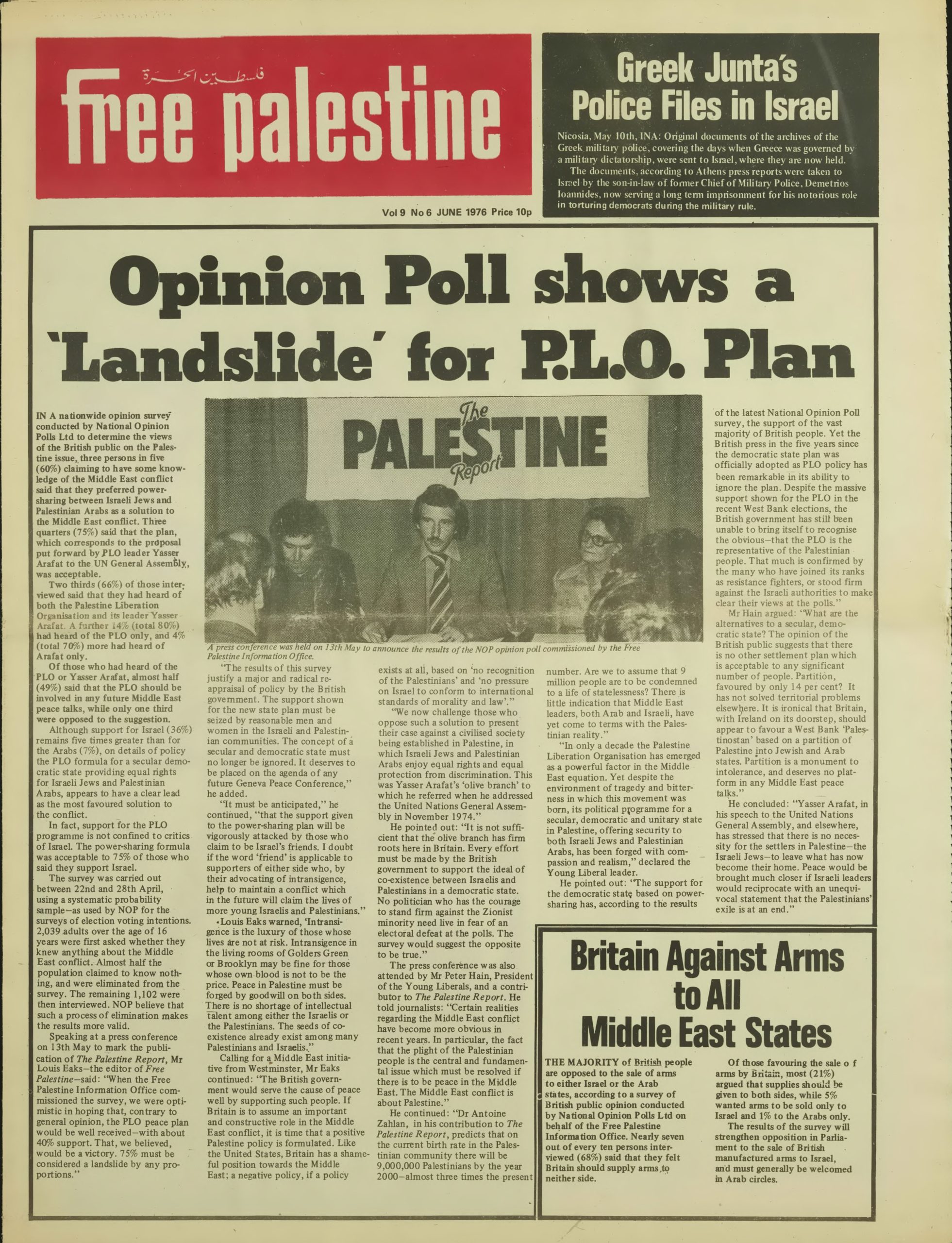
Surveys were another key tactic used by Free Palestine to record and prove the growing support for Palestine amongst the British public. These surveys were often commissioned by the ‘Free Palestine Information office’ and conducted nationwide by the National Opinion Polls Ltd, with the results later shared by the magazine. Polls such as “Palestine: What Britain thinks?” were conducted between April 22 and 28 1976 and were published on the front cover of the June 1976 issue.
Free Palestine (June, 1976).
Free Palestine (January, 1973).
Other surveys included polls on British opinion on Britain’s arms support for Israel. That poll reports that:
THE MAJORITY of British people are opposed to the sale of arms by Britain, to either Israeli or the Arab states…Nearly seven out of every ten persons interviewed (68%) said that they felt Britain should supply arms to neither side. Of those favoring the sale of arms by Britain, most (215) argued that supplies should be given to both sides, while 5% wanted arms to be sold only to Israel and 1% to the Arabs only. (June, 1979)
Such polls were used not only to inform readers but also to influence British politics and the votes in the parliament as the report writes, “The results of the survey will strengthen opposition in Parliament to the sale of British manufactured arms to Israel and must generally be welcomed in Arab circles.”
Organisational Landscape
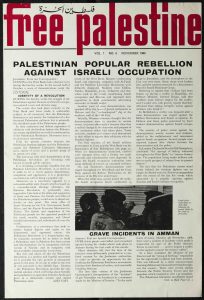
Free Palestine (November 1968)
A wide range of campaigning and solidarity groups are introduced in the pages of Free Palestine, reflecting the variety and proliferation of organisations that emerged in support of Palestinian liberation in the years of the Palestinian Revolution. This section provides an overview of some of these organisations and where they sat in the political landscape of anticolonial and socialist currents in Britain from the 1960s-1980s. The pages of Free Palestine document the activities of several of these groups, and show how they were working together across different sectors of society in a crucial period of Palestine solidarity movement building.
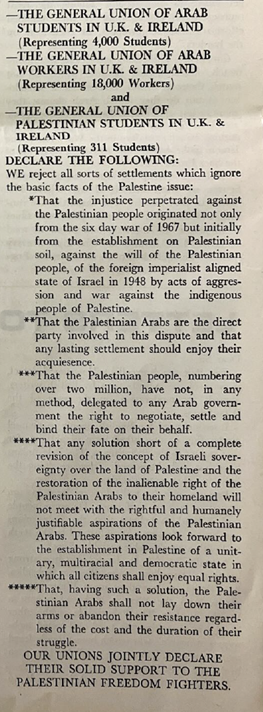
General Union’s in support of Palestine in EU (1969).
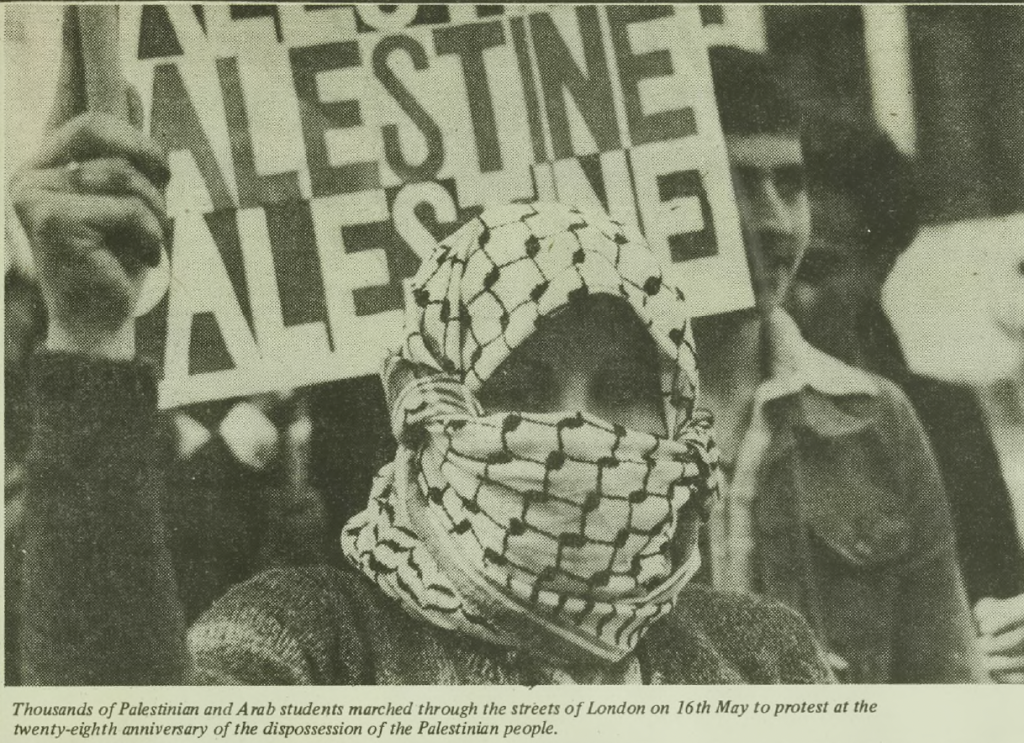
Students played a central role as founders, activists and members of Palestine solidarity organisations. Historically, students have been at the forefront of Palestinian resistance, and since 1948, Palestinian and non-Palestinian students established political organisations across Arab cities, producing extensive theoretical and cultural contributions to advance the international struggle and raise awareness about Western complicity in Palestinian oppression. In the late 1960s, several new youth and student-led Palestine solidarity organisations were established in Britain, in the context of the increasing internationalisation of Palestinian struggle and the broader currents of Third Worldist solidarity within the Western Left.
In the November 1968 edition of the paper, we are introduced to one of these newly formed groups: Friends of Palestine (FOP). FOP was led by Ghayth Armanazi, a Syrian student in London who had joined Fatah after the June war from the Syrian Social Nationalist Party in 1967. A leaflet produced by FOP is reproduced in the paper that explains who they are and defines their aims and objectives. The leaflet highlights “the parallels that can be drawn between the struggle against Zionism in Palestine and against the imperialist U.S. aggression in Vietnam,” and was initially handed out at the 27 October 1968 Vietnam solidarity demonstration in London. This march was also covered in the paper, which described the “heavy participation of the supporters of Palestinian liberation… including the Ad Hoc Committee for Solidarity with the People of Palestine.” As the pages of Free Palestine show us, FOP worked extensively within networks of European and Arab and Palestinian students in order to facilitate exchanges and solidarity between them.
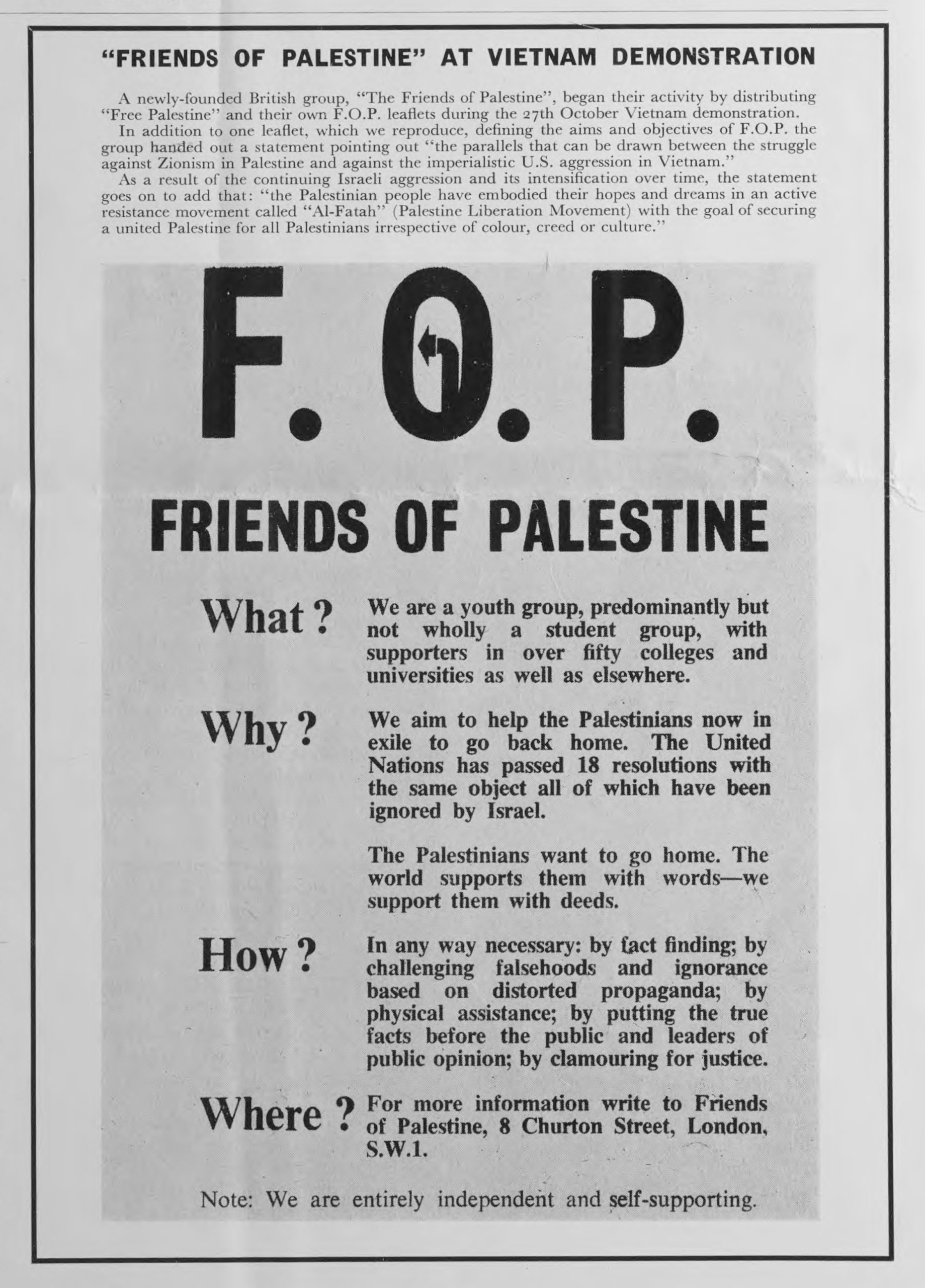
Friends of Palestine (FOP), Free Palestine (November 1968).
Also prominent in student organising in Britain were the General Union of Arab Students (GUAS). GUAS included members of Arab student unions across different universities in Britain, and their activities focused on the liberation of Palestine alongside supporting revolutionary movements in Algeria, Yemen, and Oman. Nouri al-Bahrani, graduating from Liverpool University in 1968, was the GUAS president from 1966-1971. Efforts by GUAS to mobilise Arab student support for Palestine are documented in Free Palestine, for example a report on a Palestine Students’ Spring Festival in March 1969 in Birmingham where the decision was taken to produce a regular GUAS publication in Arabic.
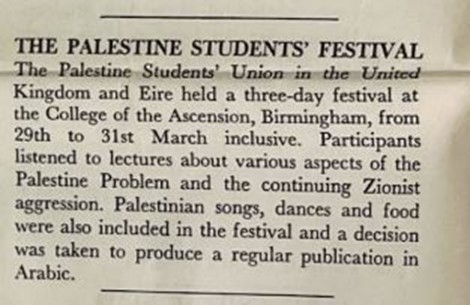
The Palestine Students’ Union in the United Kingdom and Eire held a three-day festival at the College of the Ascension, Birmingham (1969).
By early 1969, several of the different people and groups that were operating in this landscape came together to form the Palestine Solidarity Campaign (PSC), in the first attempt to create a national coordinating committee for Palestine solidarity in Britain. Its co-founders included representatives from the various institutions already active on Palestine, including Nouri al-Bahrani from GUAS, Ghayth Armanazi from FOP, Fawzi Ibrahim, Secretary of the London Revolutionary Socialist Students’ Federation, and Fawwaz Traboulsi, studying at SOAS.
The PSC’s manifesto was published in May 1969 in Free Palestine. The manifesto described the PSC as “a permanent organisation to organise all solidarity activities in Britain with the struggle of the Palestinian people for national liberation against Zionism and imperialism.” Its main positions included opposition “to all forms of racism” and the assertion that “the struggle of the Palestinian people and the Arab masses, like that of the Vietnamese people and all the peoples of Asia, Africa and Latin America forms part of the historical process of liberating the oppressed peoples from the yoke of imperialism.” Signatories to the manifesto reflected the extent of support for Palestinian liberation amongst various socialist, migrant, student and international solidarity groups active in Britain.
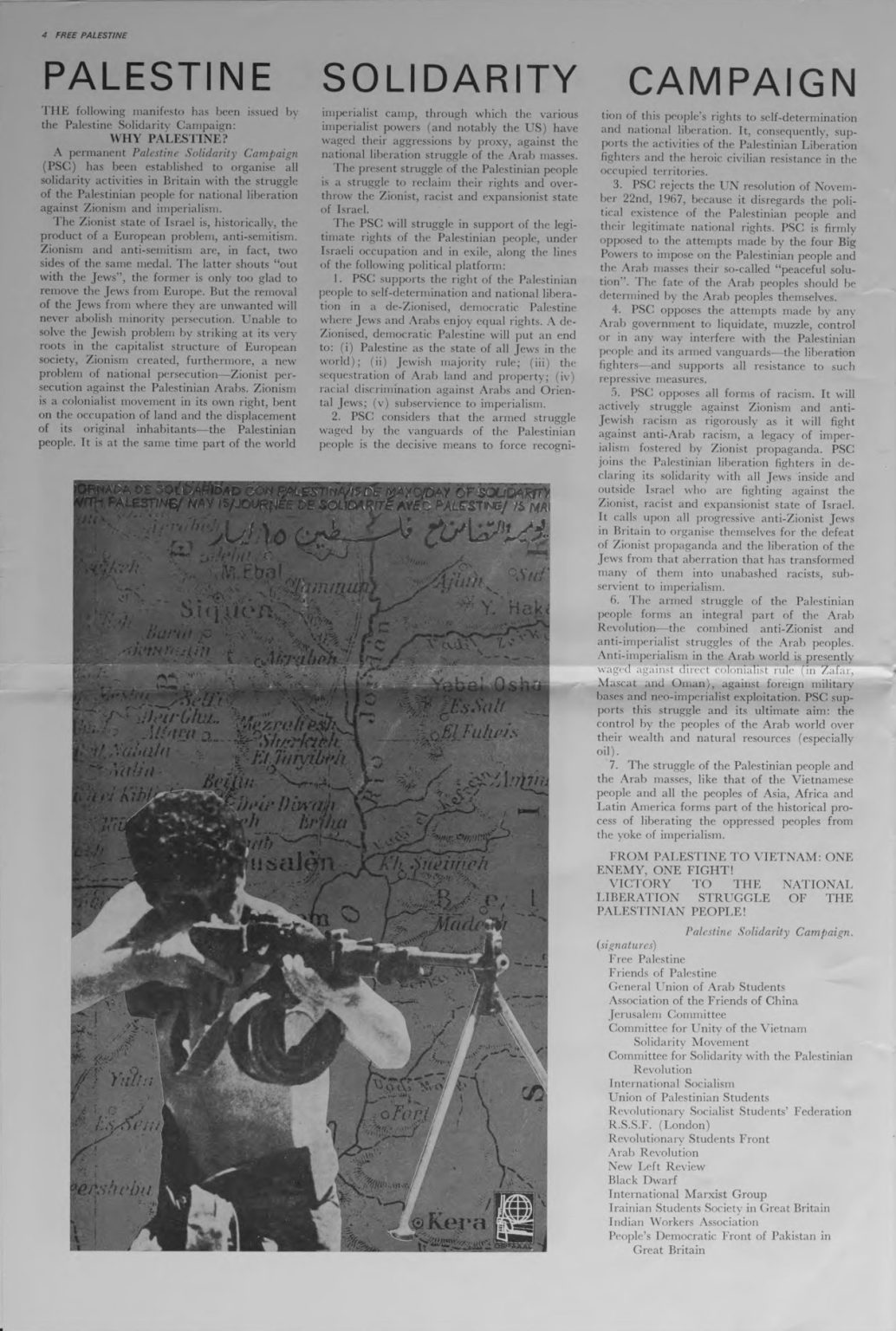
▴ Free Palestine (May 1969)
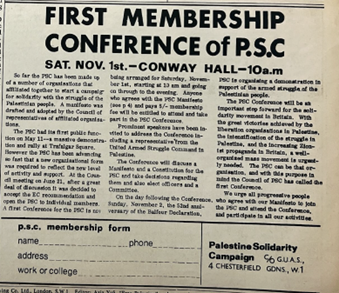
By November 1969, the PSC held its first national conference, during which the manifesto was democratically endorsed, and the campaign became a membership organisation.
The PSC and other groups behind the manifesto organised and participated in a wide range of activities, from teach-ins, joint meetings, public statements, conferences, delegations, publications, advocacy and building international connections, which brought together people from across the new left alongside Palestinian representatives.
Free Palestine (September 1969).
These wide range of activities were covered extensively in Free Palestine. Following up on the call from the PLO at a January 1969 Conference in Support of the Arab Peoples in Cairo, 11 May marked the beginning of Palestine Week with a large demonstration, reportedly up to 4,000 people, organised by the PSC in Trafalgar Square. Also included in the week’s activity was a meeting chaired by LSE academic and activist Fred Halliday that opened with a direct message from the Al-‘Asifah forces, speeches from Palestinians Fayez Sayegh, Nabil Nasser (representing the Union of Palestinian students in West Germany and Austria), Lina Mukdadi, speaking on behalf of Palestinian women, and Nabil Sha’ath, representing Fatah. Tariq Ali, Antony Nutting (MP), and a representative of Matzpen spoke on how to connect the British left to the Palestinian struggle for liberation. Alongside the rally, the week of solidarity was marked by one of the earliest exhibitions of Palestinian art to take place in London, hosted by the GUAS and organised by Palestinian novelist Soraya Antonius.
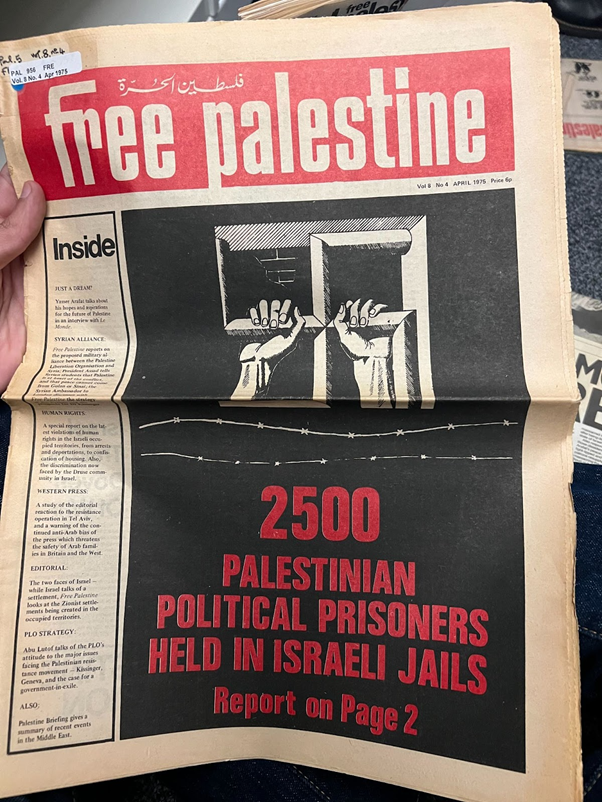
Free Palestine (April 1975)
However, reflecting rifts within the movement, by early November 1971, a separate ‘provisional executive committee’ of the PSC had emerged that based itself at a separate office, after which the PSC as an organisation largely disappeared from the pages of Free Palestine. The current PSC is a separate organisation established in Britain in 1982, unconnected to the earlier body.
In 1973, another new organisation emerged: Palestine Action, founded by Ghada Karmi. Their aim was to appeal to a broad movement, and they did so with a variety of activities. Palestine Action worked closely with the Free Palestine publication team. Their activities included distributing their own newsletter, hosting film screenings and speaker meetings, attending student, union and political party conferences, opening regional branches and autonomous local committees, and producing material for distribution in magazines and media channels.
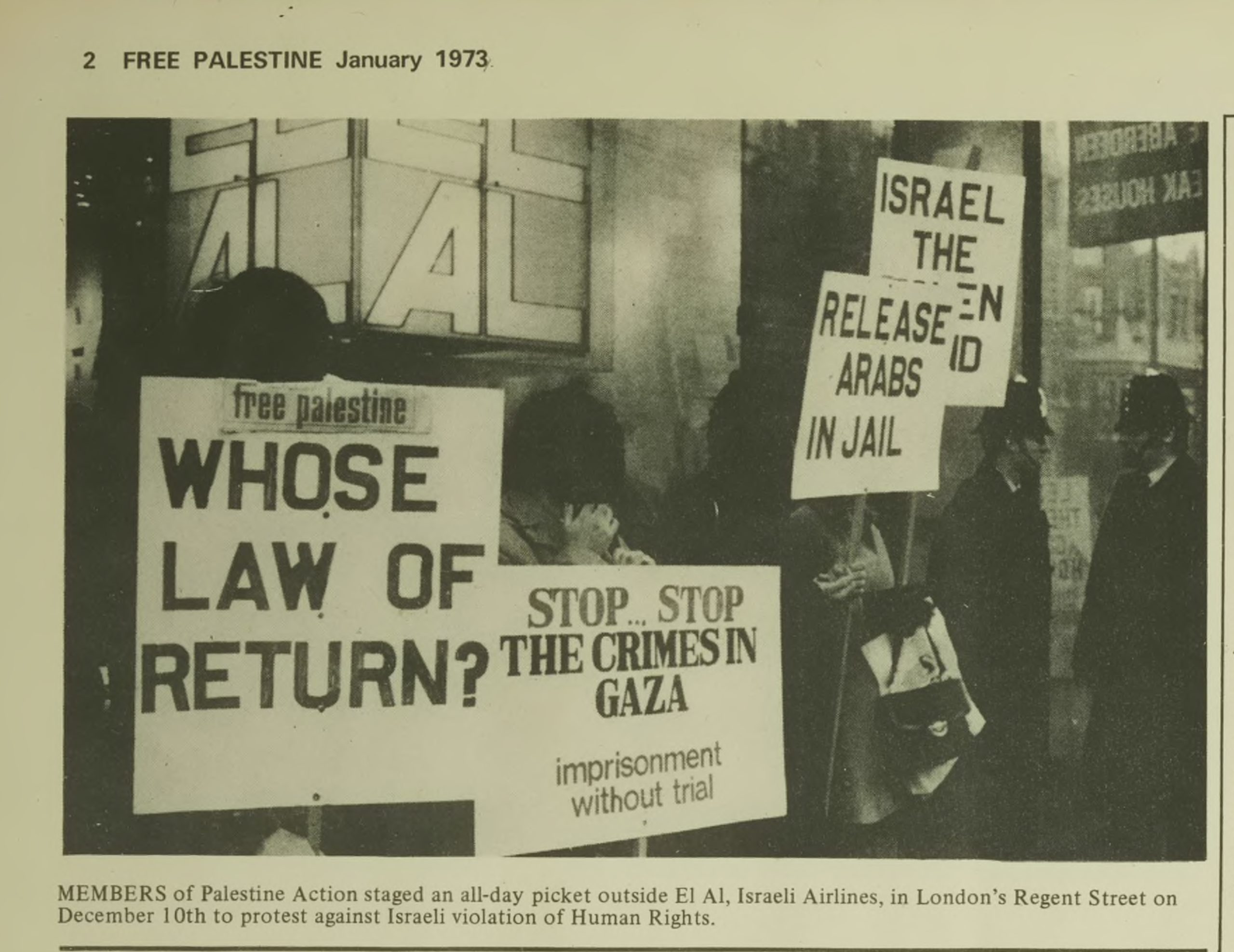
Members of Palestine Action staged an all-day picket outside El Al, Israeli Airlines, in London’s Regent Street on December 10th to protest against Israeli violation of Human Rights (January 1973).
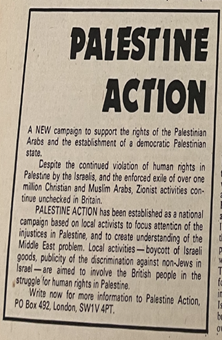
Free Palestine (August 1972)
With its approach to broad-based movement building and cross-parliamentary lobbying, Palestine Action represented a shift in approach from the earlier PSC, but it was also a continuation in substance of Palestine solidarity organising, filling a vacuum of national organising, with many of the same people involved in their networks. An indication of the group’s ambition to be a force capable of influencing parliamentary politics in Britain can be seen in the invitation of Andrew Faulds, Labour MP, to be their president, which he accepted.
The executive committee of Palestine Action decided to formally cease operations in September 1978. Yet, by 1978, around 20 organisations were reported all over the UK as actively involved in solidarity campaigns or actions in favour of Palestine.
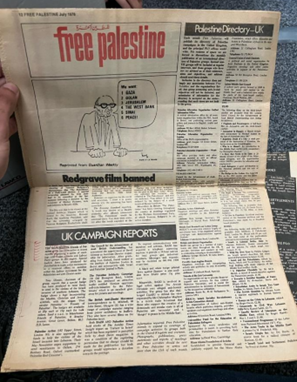
Free Palestine (July 1978).
Between 1968 and 1978, Free Palestine published an international directory of Palestine solidarity groups, listing aims, objectives, and contact information. From 1978 onwards, the directory focused on the UK while including periodic updates on international organisations. To be advertised in this directory, groups had to send their aims, objectives and address. In addition, the paper states that inclusion in the directory “does not imply any association between Free Palestine and the organisations listed”. They explicitly reject any group that “promote anti-jewish objectives” and that “submission for the information for the directory is accepted on the understanding that such views are not held by the group.”
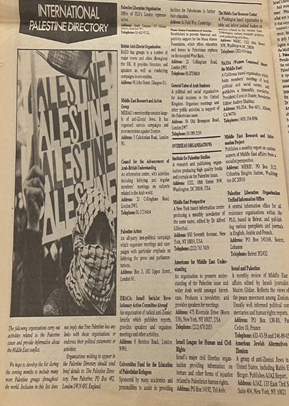
Free Palestine (July 1978).
Free Palestine’s coverage of the shifting organisational landscape in this era is a reminder of the remarkable durability and consistency of the publication itself for almost two decades. Despite experiencing financial difficulties in 1979 and temporarily halting publication, the magazine resumed circulation and continued until the mid-1980s. Featured here is a handwritten note from Aziz Yafi (a pen name used by the then editor of Free Palestine) addressed to Lady Diana Richmond who was a prominent campaigner for Palestinian rights. The note accompanied a printed letter explaining the temporary suspension of Free Palestine due to financial constraints.
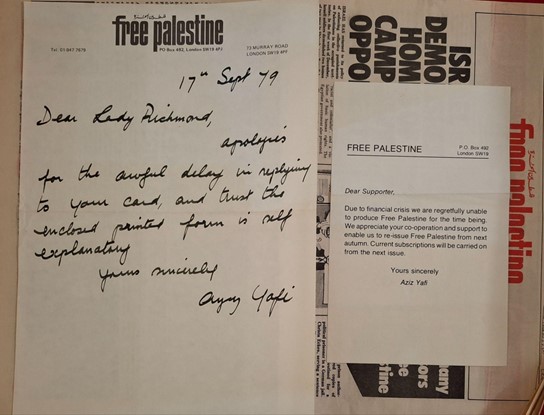
Letter from Free Palestine (September 1979). Richmond Papers, EUL MS 115/35 and MS 115/19/8. Reproduced courtesy of Special Collections, University of Exeter.
The role of the magazine as an international directory of Palestine solidarity groups exemplifies its function as a connective tissue for transnational activism. By listing organisations, outlining their aims, and publicising their actions, Free Palestine facilitated knowledge-sharing and collaboration. This organisational memory is invaluable for contemporary activists seeking to build on historical foundations rather than starting anew – a central tenet of anti-colonial praxis, which emphasises continuity over rupture.
Tactics and Actions
Through interviews, reports, and visual documentation, the magazine provided readers with firsthand accounts of the Palestinian struggle, fostering cross-border networks of support. It highlighted the range of tactics employed by activists, the significance of student involvement, and the magazine’s role as a platform for Palestinian leaders, revolutionaries and everyday voices.
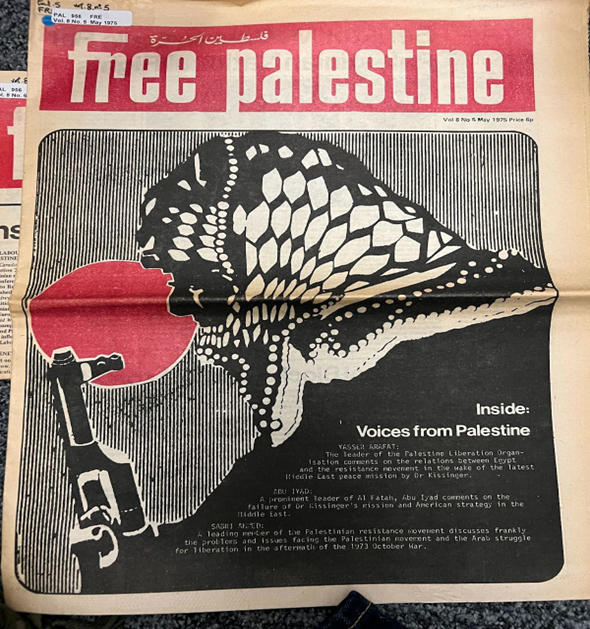
▴ Free Palestine May 1975
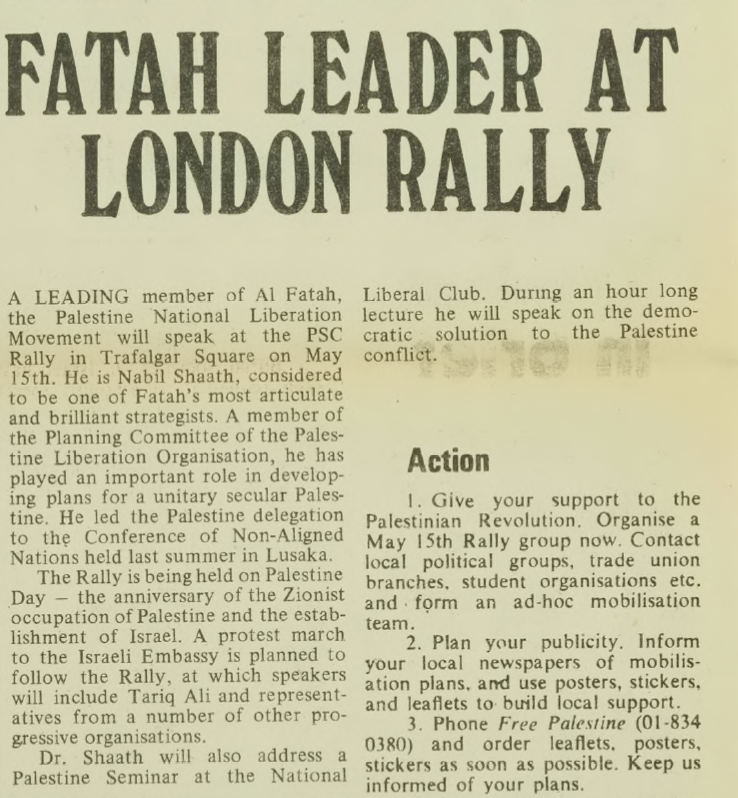
Free Palestine (April 1971)
The magazine served as a vital medium for Palestinians to articulate their perspectives directly to an international audience. Interviews were published with key figures such as Yasser Arafat (Abu Ammar, Chairman of the PLO), George Habash (founder of the Popular Front for the Liberation of Palestine), Abu Hatim (senior figure in the Arab Liberation Front), Sabri Ahmed (representative of the Democratic Front for the Liberation of Palestine), and Abu Iyad (deputy chief and head of intelligence for the Palestine Liberation Organization). These figures often addressed the state of the resistance movement, the challenges it faced and regional and international tensions and developments. Despite frequently featuring Fatah leaders, the magazine explicitly stated from its inception that it was not affiliated with any political faction and maintained an independent stance.
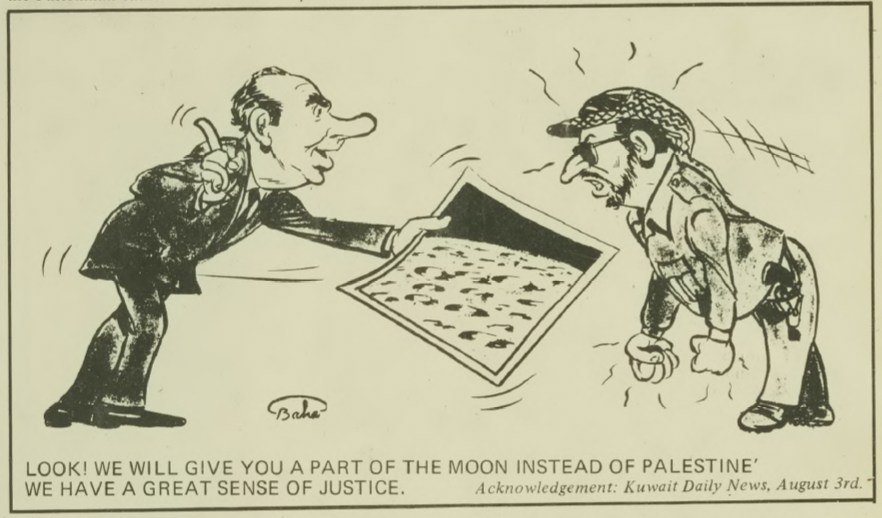
Free Palestine (September 1973)
The magazine also captured key moments of political analysis and strategy from within the Palestinian leadership. In the issue of May 1975, Abu Iyad commented on the failure of Dr. Henry Kissinger’s Middle East mission and the shortcomings of American strategy in the region. That same issue included a candid interview with Sabri Ahmed, who discussed the pressing problems facing the Palestinian movement and the broader Arab struggle for liberation in the wake of the 1973 October War.
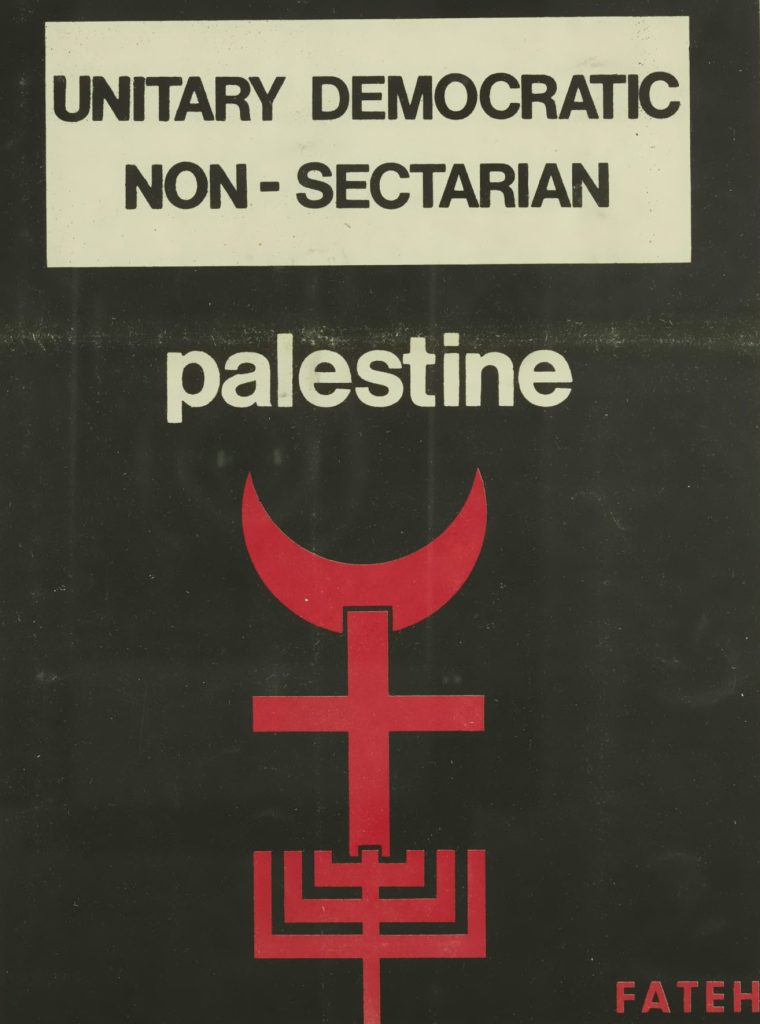
A recurring theme across many of these interviews, and since the late 1960s, was the call for a secular, democratic one-state solution. In an exclusive interview published in August 1969, Yasser Arafat outlined the PLO’s vision for a unitary, democratic, and non-sectarian state, underscoring the necessity of armed resistance as a means of achieving self-determination. Interviewed by Salma Khalili, she wrote:
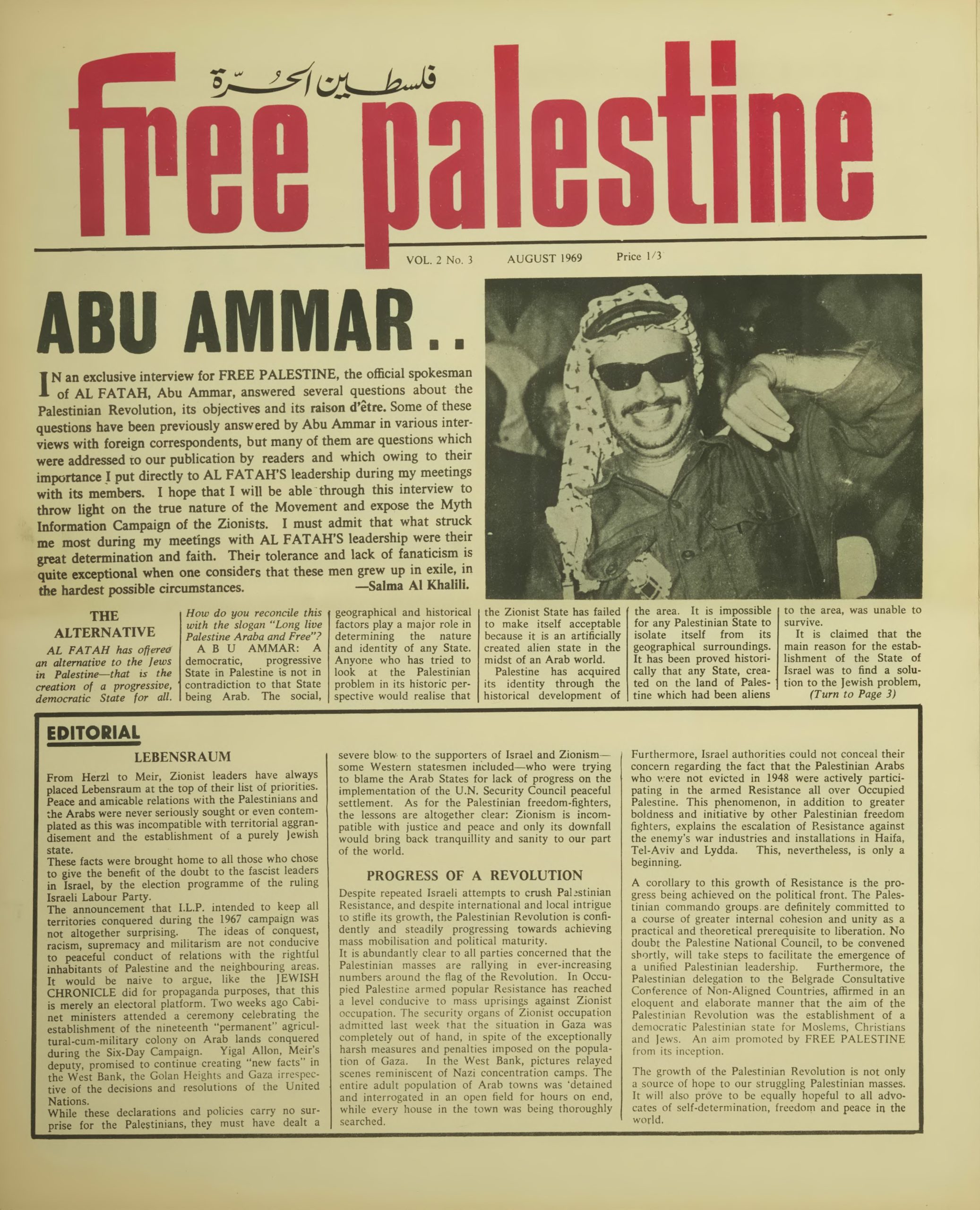
Free Palestine (August 1969).
IN an exclusive interview for FREE PALESTINE, the official spokesman of AL FATAH, Abu Ammar, answered several questions about the Palestinian Revolution, its objectives and its raison d’être. Some of these questions have been previously answered by Abu Ammar in various interviews with foreign correspondents, but many of them are questions which were addressed to our publication by readers and which owing to their importance I put directly to AL FATAH’S leadership during my meetings with its members. I hope that I will be able through this interview to throw light on the true nature of the Movement and expose the Myth Information Campaign of the Zionists. I must admit that what struck me most during my meetings with AL FATAH’S leadership were their great determination and faith. Their tolerance and lack of fanaticism is quite exceptional when one considers that these men grew up in exile, in the hardest possible circumstances. Free Palestine (August 1969)
These views on a secular and democratic Palestinian state continued to be expressed in various issues over the years. For instance, Abu Hatim, a spokesman for Al-Fatah, stated in October 1973:
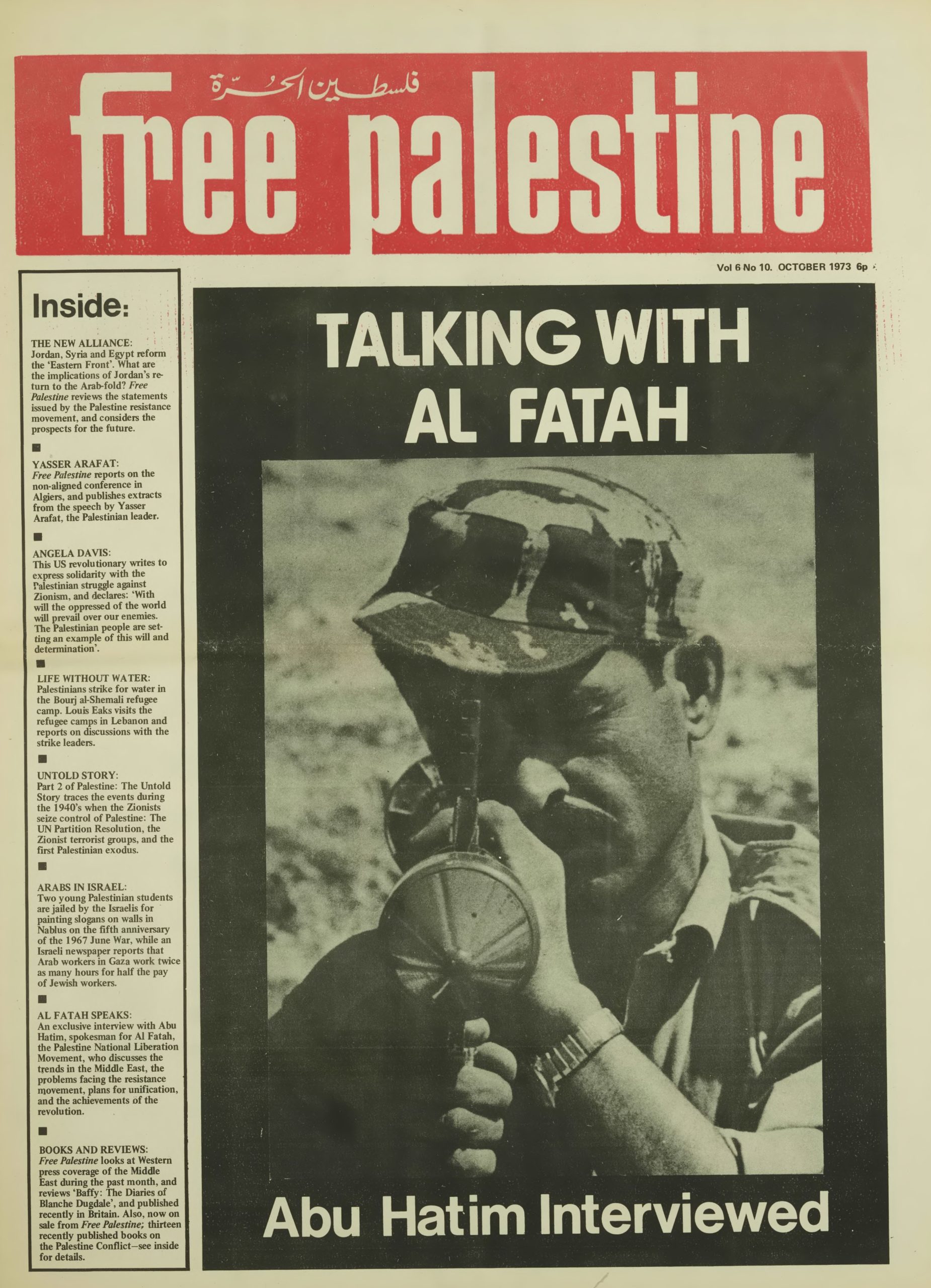
Free Palestine<\em> (October 1973).
The Palestinian revolution has a clear and correct political line, based on the understanding of the fight against Zionism and the Zionist state as a whole. This Zionist state is supported by international imperialism and the United States in particular. We have put forward our solution to this problem which is the democratic Palestinian state; the liberation of all our land and the establishment of the Palestinian state where we can all live together without racial and religious discrimination. We demand self-determination for all the Palestinian people in the total area of Palestine.
Free Palestine also published direct rejections of a two-state solution. In April 1974, the magazine featured extracts from a message by Dr. George Habash, Secretary General of the Popular Front for the Liberation of Palestine (PFLP), in which he denounced the idea of a settlement with Zionist forces and the creation of what he described as a “dwarf Palestinian state” – a national authority established at the cost of legitimising Israel’s existence:
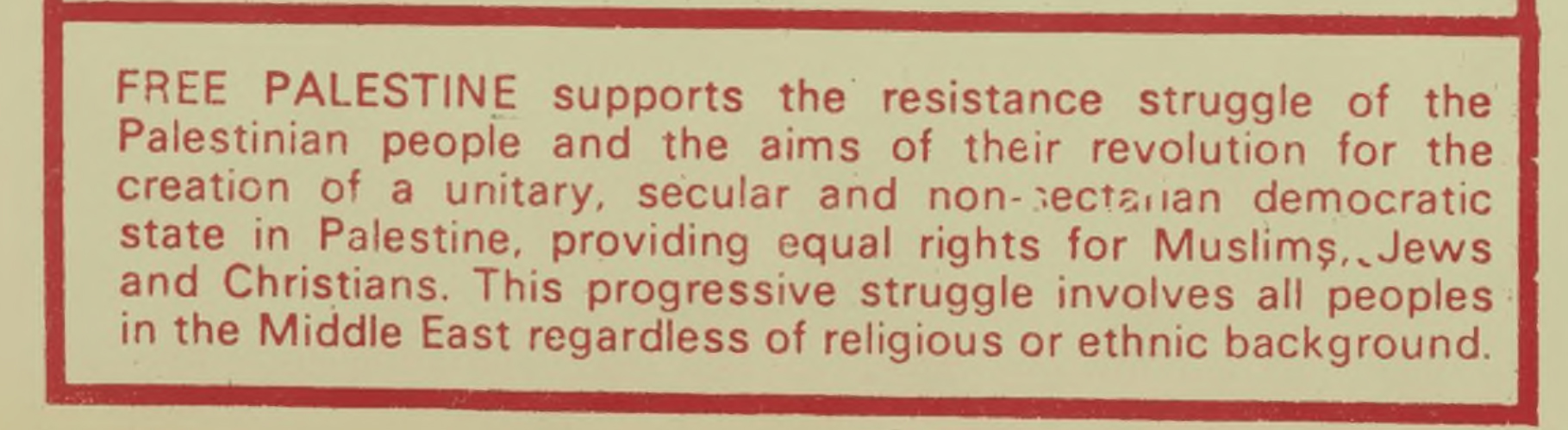
Free Palestine (January 1973)
In addition to political leaders, Free Palestine featured the voices of ordinary Palestinians, including refugees and members of the fedayeen, as well as political prisoners. Their lived experiences of displacement and resistance offered a humanising counter-narrative to mainstream portrayals. The front cover of the October 1972 issue featured the story of Samir, pictured with his two young Palestinian brothers. His family fled from Jaffa in 1948 following the events of the Nakba:
They moved to the West Bank, hoping that soon they would return to their home. However, Israel ignored United Nations calls for the return of the refugees. In 1967, when Israeli troops occupied the West Bank, Samir fled again with his family to seek shelter in Jordan. TODAY, Samir is a member of the Palestinian resistance movement, Al Fatah. For twenty four years he has longed to return to Jaffa, but Israel rejects the United Nations call to respect the inalienable right of the Palestinians to return to their homeland. Thousands of Palestinians have now joined in the resistance to liberate their land. THE Palestine Liberation struggle is not based on revenge or hatred for the Jews. Its aim is to establish an undivided state in Palestine providing equal rights for Jews, Muslims, and Christians alike.
The magazine frequently reported on the struggles of Palestinian refugees living in camps. An article in October 1973 detailed the conditions of Palestinian refugees in Lebanon and their acts of defiance against UNRWA, titled: “Defiance at Bourj Al-Shemali: Palestinians Strike for Rights.” Another article in February 1979 covered UNRWA budget cuts and refugee responses to the funding diminishment. Other issues featured articles written by Rosemary Sayigh, such as “Existence in the Camps: Everything in Our Lives is a Struggle” (January 1979).
Some articles also centred the role of Palestinian women in the struggle, such as Salma Khalili’s piece, “Refugees in 1948, Freedom Fighters in 1968,” which aimed to “bring to light the role of the Palestinian woman in the struggle for the liberation of Palestine and to dispel the myth that has portrayed the Arab woman as an illiterate, submissive, and inactive member of Arab society.”
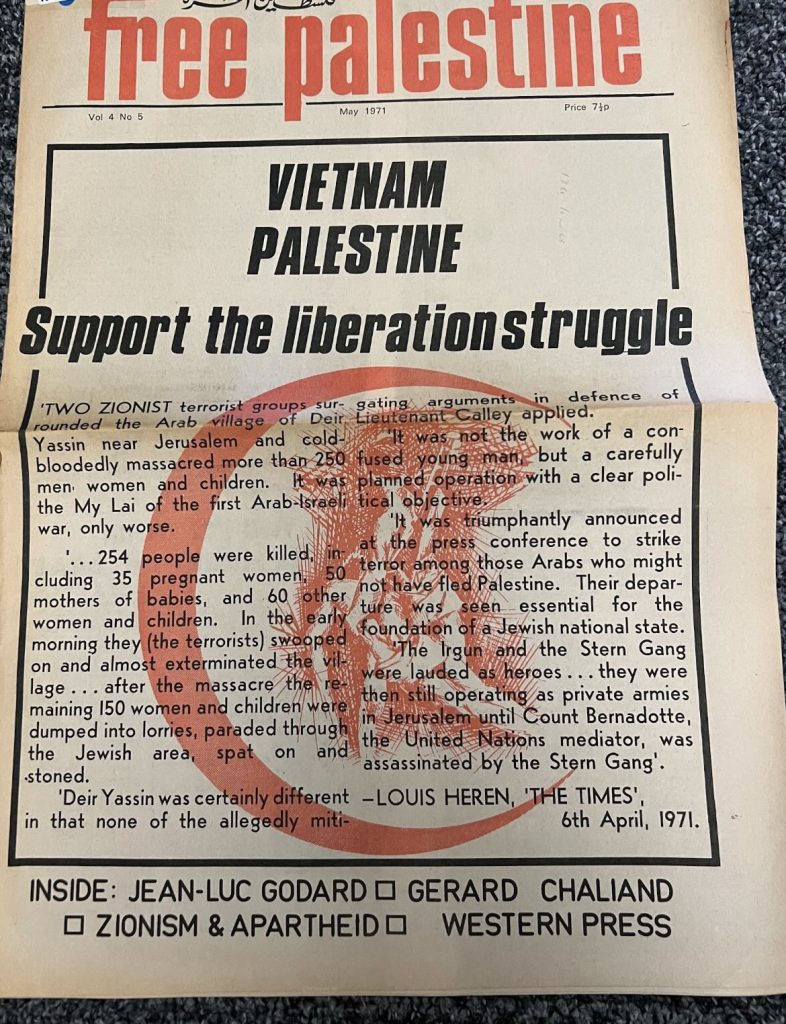
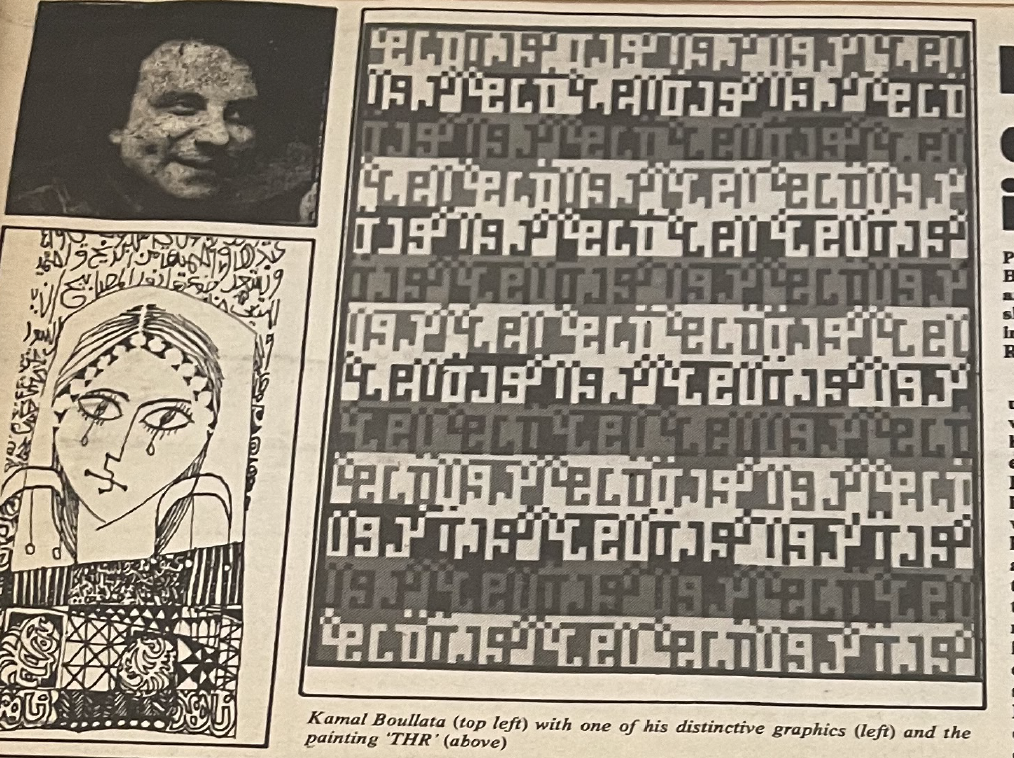
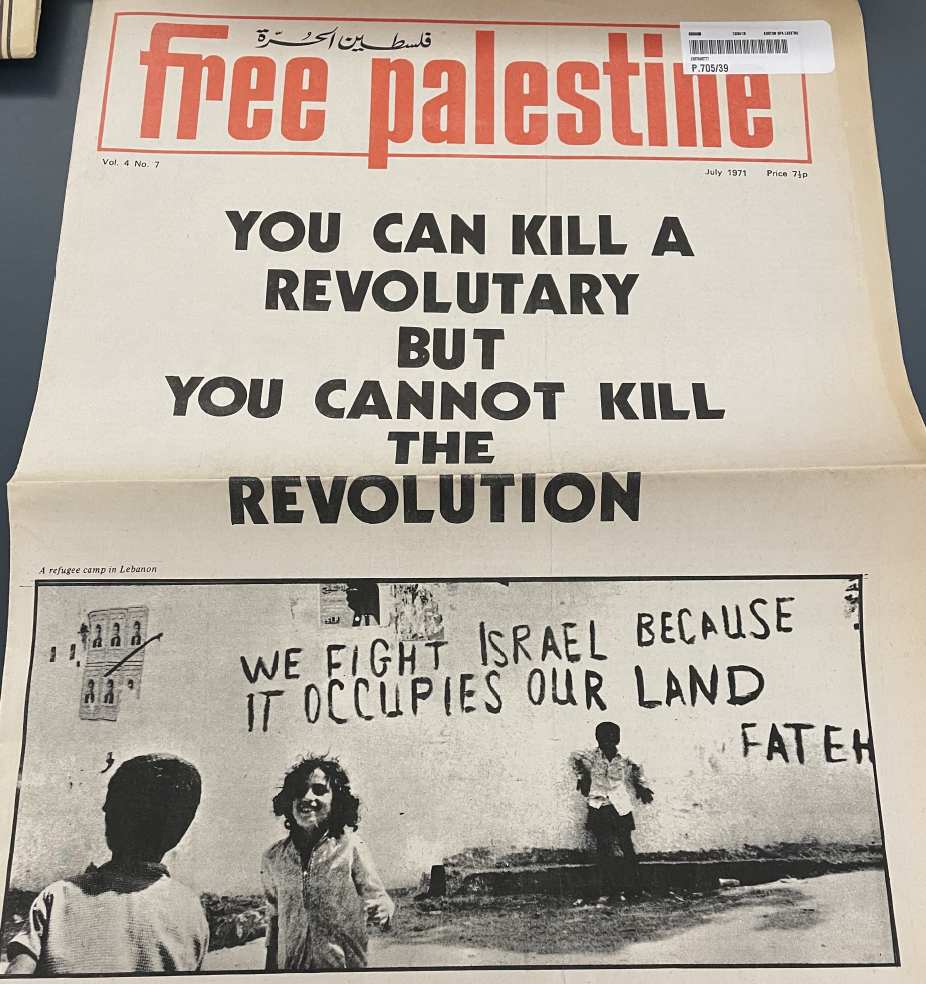
The magazine’s front covers often featured artwork by various artists and included pieces articulating the motivations behind armed struggle, framing it as a legitimate response to systemic violence and dispossession. One cover declared: “Resistance is an Inevitable Result,” encapsulating the overarching sentiment that armed resistance was not a choice but a necessity imposed by decades of displacement and oppression.
Free Palestine (April 1975)
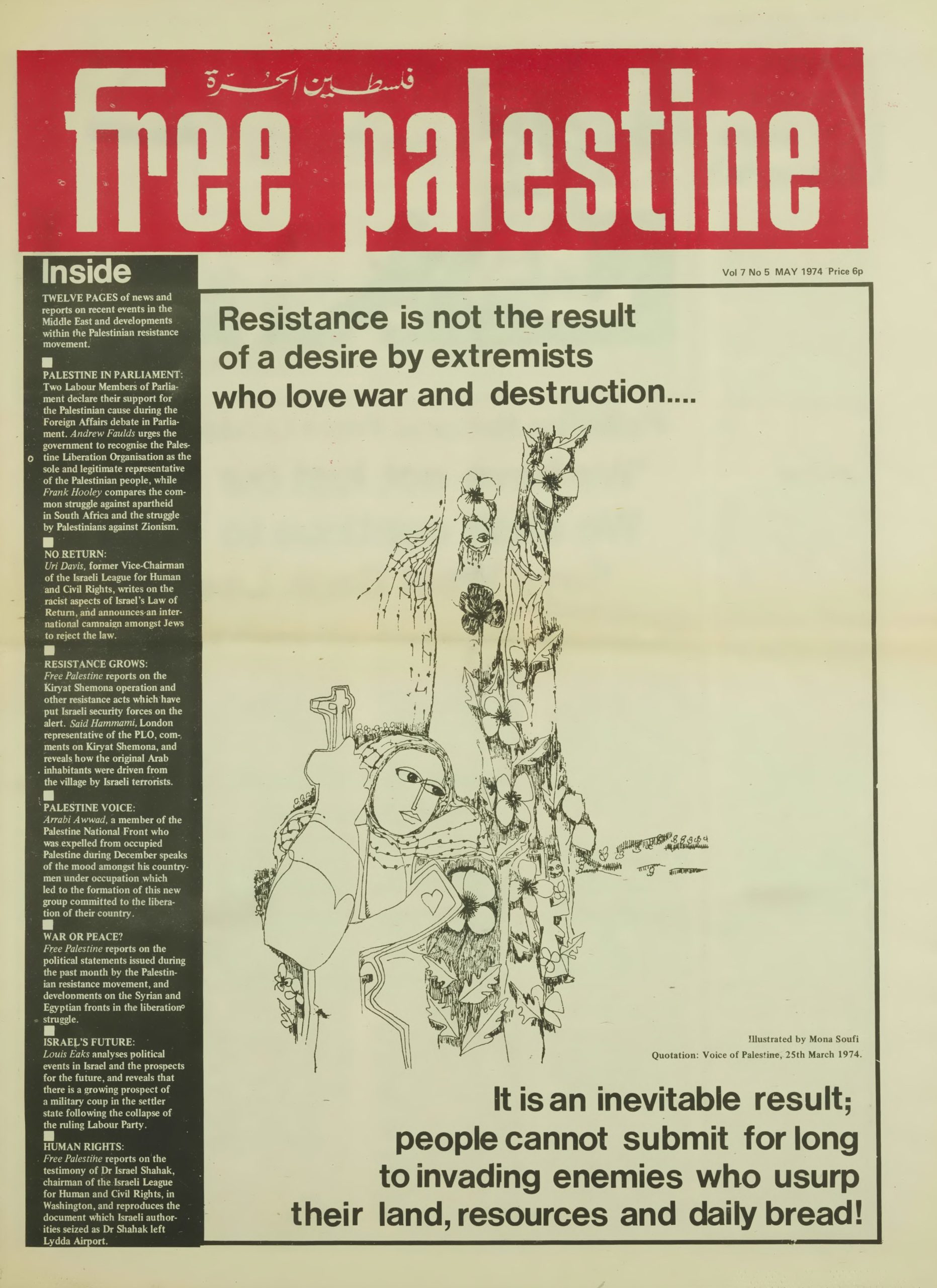
Free Palestine cover (May 1974).
Solidarity Actions in Britain and Beyond
Free Palestine also played an active role in documenting solidarity actions, encouraging and mobilising readers to participate in protests, sit-ins, boycotts, and educational events – seminars and teach-ins. A notable example was the first membership conference of the Palestine Solidarity Campaign (PSC) in November 1969, which received three consecutive calls for participation within three months, reflecting the magazine’s commitment to advancing the campaign’s objectives. The conference agenda included discussions on building grassroots support, with key outcomes such as establishing local chapters in London, Manchester, and Glasgow. In their first conference the magazine reports in November 1969:
They also share a letter from Fatah to the members of the PSC:
We take the opportunity of your meeting to convey to you our warm regards and sincere appreciation of your efforts in support of the Palestinian Revolution. Through these efforts you serve peace, freedom and justice, not in Palestine alone but in the whole world. Gone are the days when one British lord could presume to dispose of the fate of a whole people by a promise addressed to another lord. And all this without the protest or even knowledge of the British people. The Palestinian people never accepted the legitimacy of the Balfour Declaration, and have resisted imperialism and Zionist schemes for more than half a century.
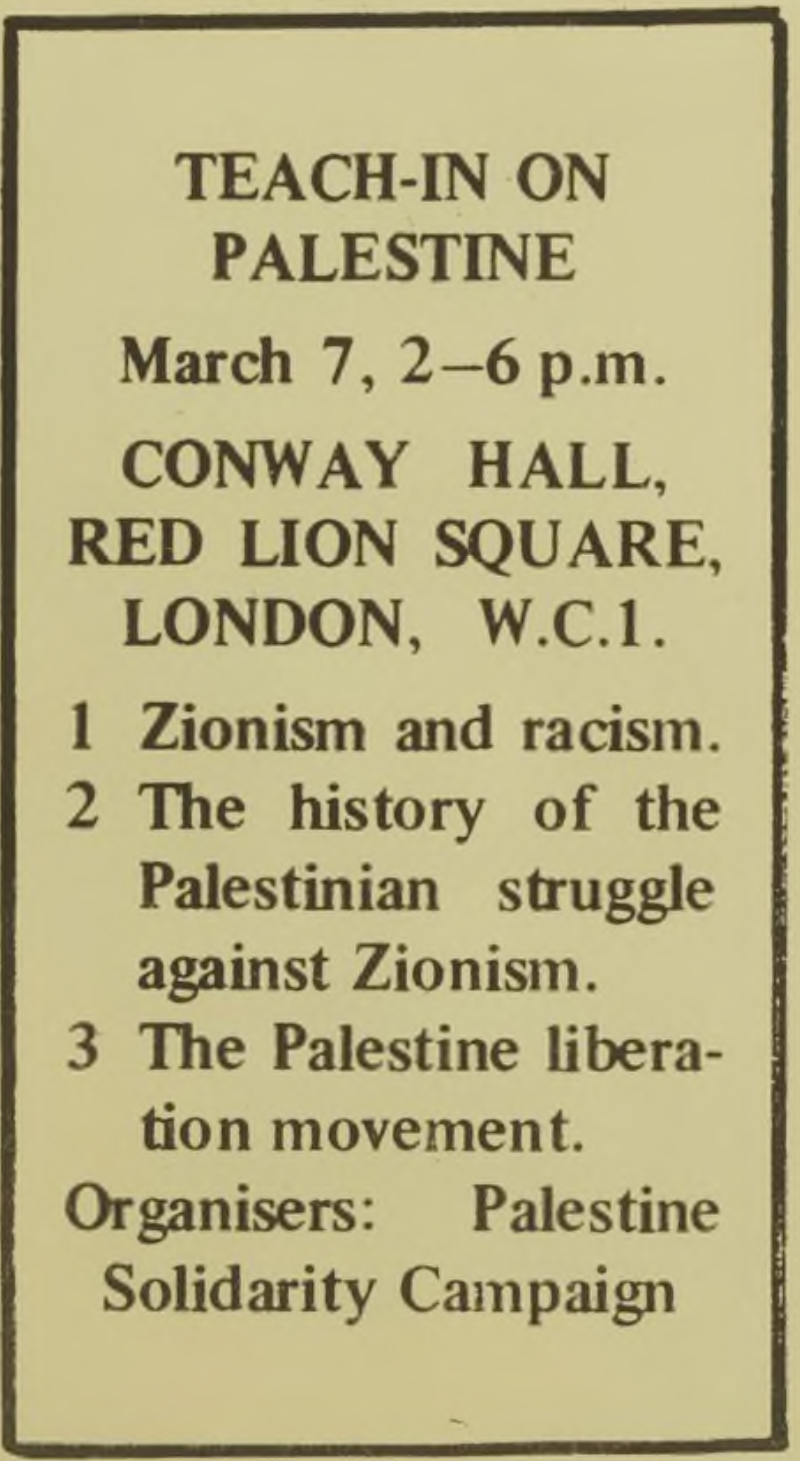
TEACH-IN at Conway Hall. Free Palestine (February 1970).
Similarly, other conferences were also reported, such as the Christians for Palestine Conference held in February 1971 which highlighted the intersection of faith-based advocacy and political activism. Another effort was an international conference held in London from 19–21 December 1969, reported in Free Palestine (January 1970), which brought together a range of students, workers, diplomats and revolutionary cadres to discuss the conditions of revolution in the Arab world in connection to the “current shift in position on the European left towards the Palestinian cause.” Participating in the conference, under the slogan ‘the escalation of guerrilla action and the Palestinian revolution,’ were representatives of resistance organisations (Fatah, PFLP, ALF and the DFLP); the General Union of Arab Workers in Britain; representatives from the Arab student unions; ambassadors from the Arab states in London; and delegates from a range of progressive groups and magazines including Free Palestine.
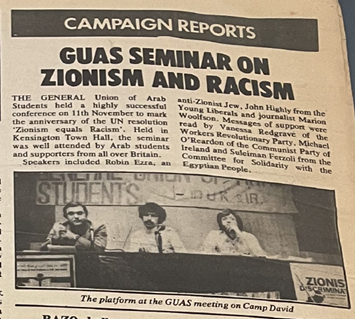
Seminar on Zionism and racism GUAS. Free Palestine (December 1976).
The conference emphasised the role of Arab students in the UK and the need to forge connections between students and workers in Europe. Another public meeting, a month later, in February 1970, featured speakers from Palestine, Vietnam, and South Africa, further illustrating the interconnected nature of global anti-colonial struggles. Teach-ins and seminars were also frequently organised and reported in the magazine. The 1976 GUAS seminar on Zionism and racism served as an educational platform where activists could share knowledge and strategies.
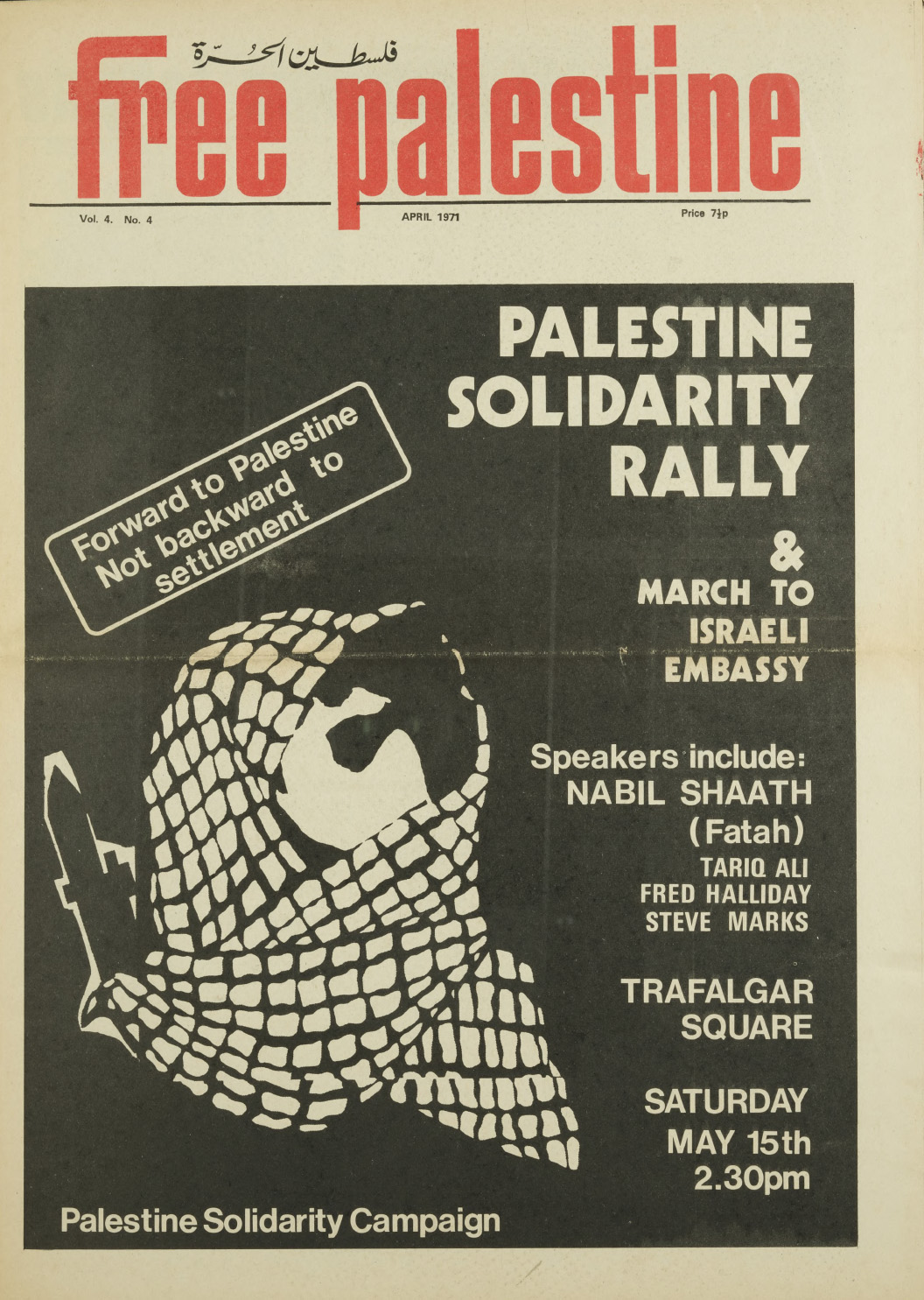
▴ Free Palestine cover (April 1971).
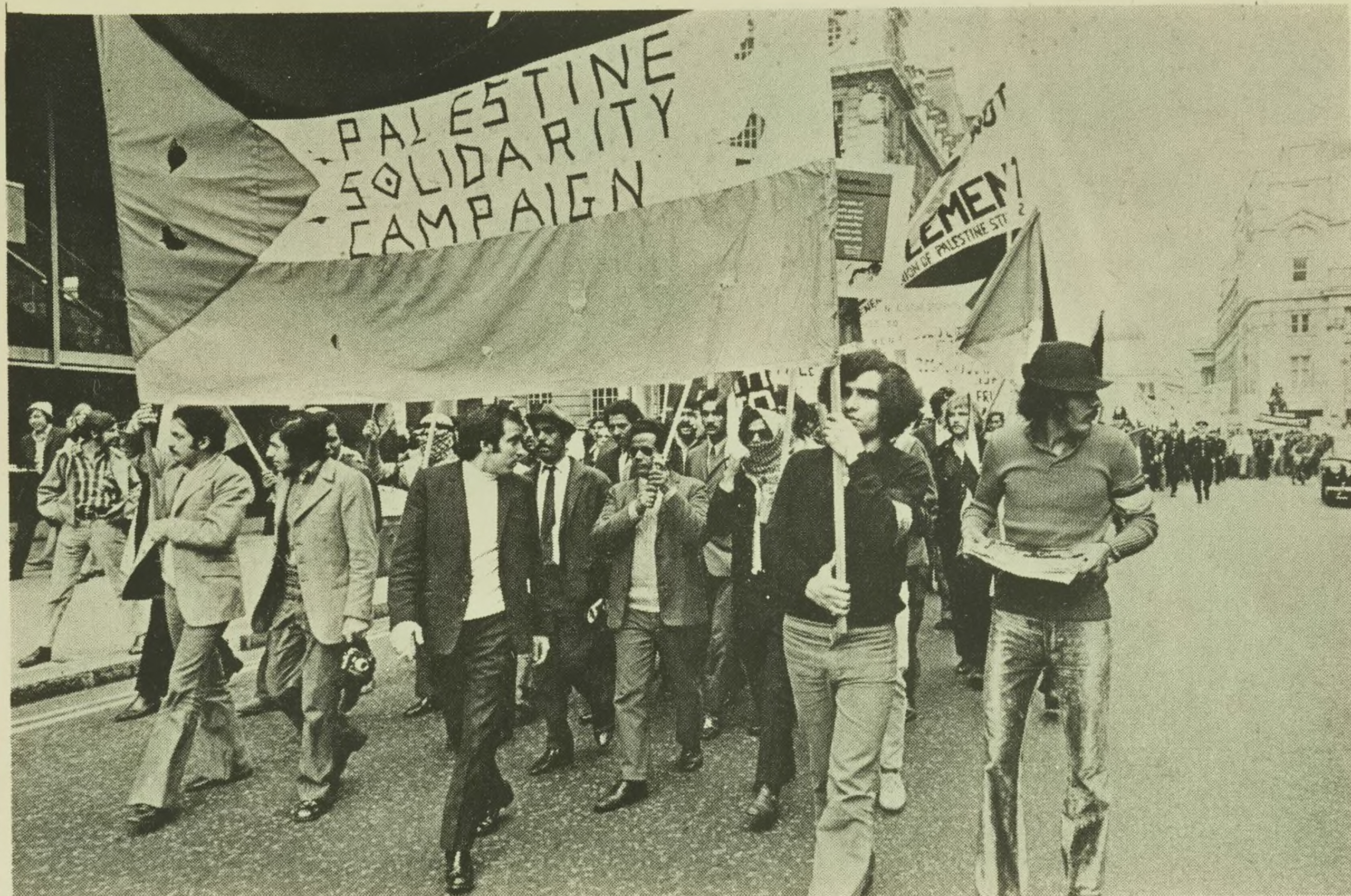
Protest for Gaza. Free Palestine (June 1971).
Protests across the UK were likewise often reported and covered. These protests were in response to Israeli attacks or in response to complicit politicians and companies; such as demonstrations outside the Guildhall against Prince Philip’s comments (July 1973), as well as rallies in support of Gaza (June 1971, September 1971). Women played a visible role in these actions, with Palestinian women living in Britain staging their first public protest in July 1973, challenging both Israeli occupation and Western complicity.
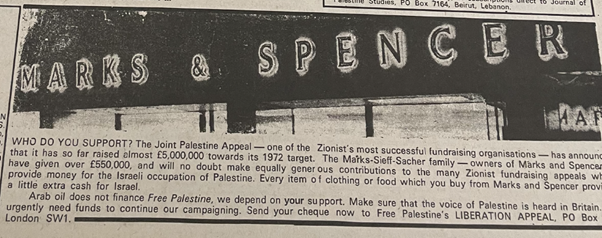
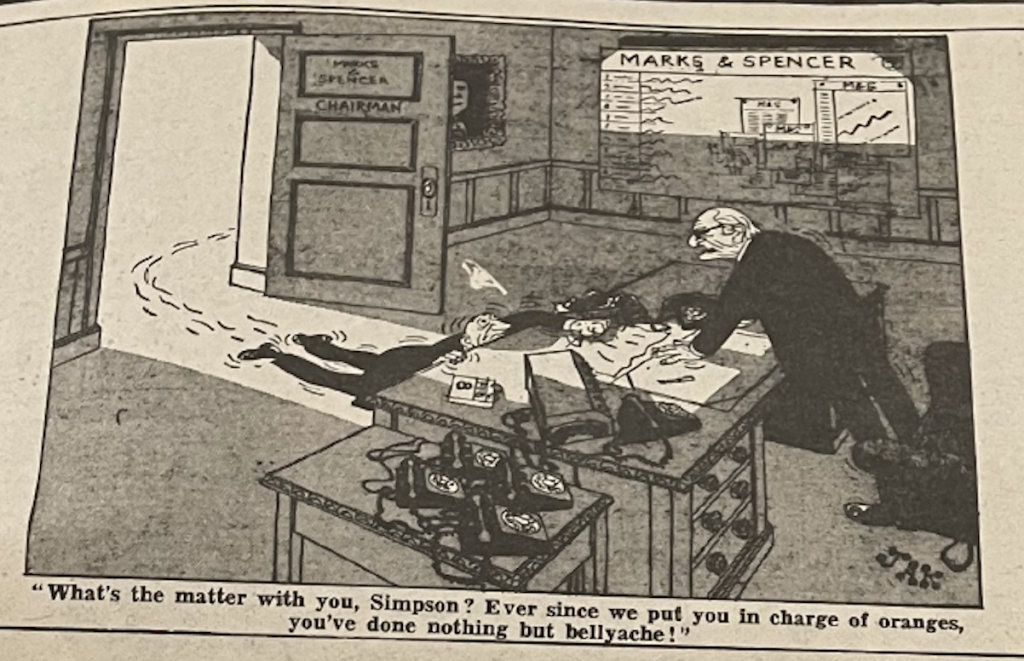
A call to boycott Marks and Spencers. Free Palestine (February 1972).
Boycotts were another key tactic, with a 1972 call urging readers to boycott Marks and Spencer due to its financial support for Israel. The call mentions the Marks-Sieff-Sacher family as the owners of Marks and Spencer who have given over 550,000GBP to a Zionist organisation which provides money for the Israeli occupation. The text writes “Every item of clothing you buy from Marks and Spencers provides a little extra cash for Israel”.
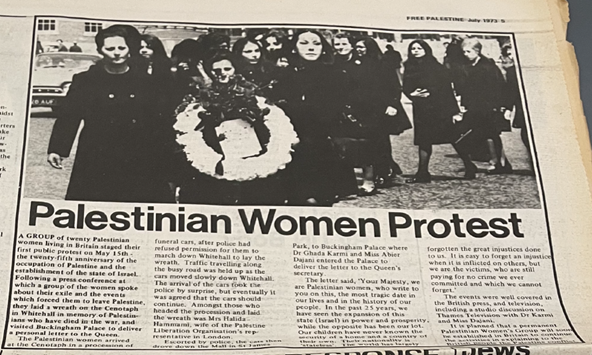
Free Palestine (July 1973).
While a 1973 campaign organised by a group formed that year called ‘Palestinian women in Exile’ “wrote to Britain’s leading ballet dancer Rudolf Nureyev, urging him not to visit Israel with the Royal Ballet. In a letter signed by a number of women exiles, they said: ‘Israel presents herself as a nation of culture. While we would not normally want to bring politics into culture, we must make it clear that any support given to the Israelis directly threatens the culture of our people, the Palestinians.” Their appeal concludes with: “We urge you, therefore, not to condone this injustice and the suppression of our people and their culture by performing in Israel” (September 1973).
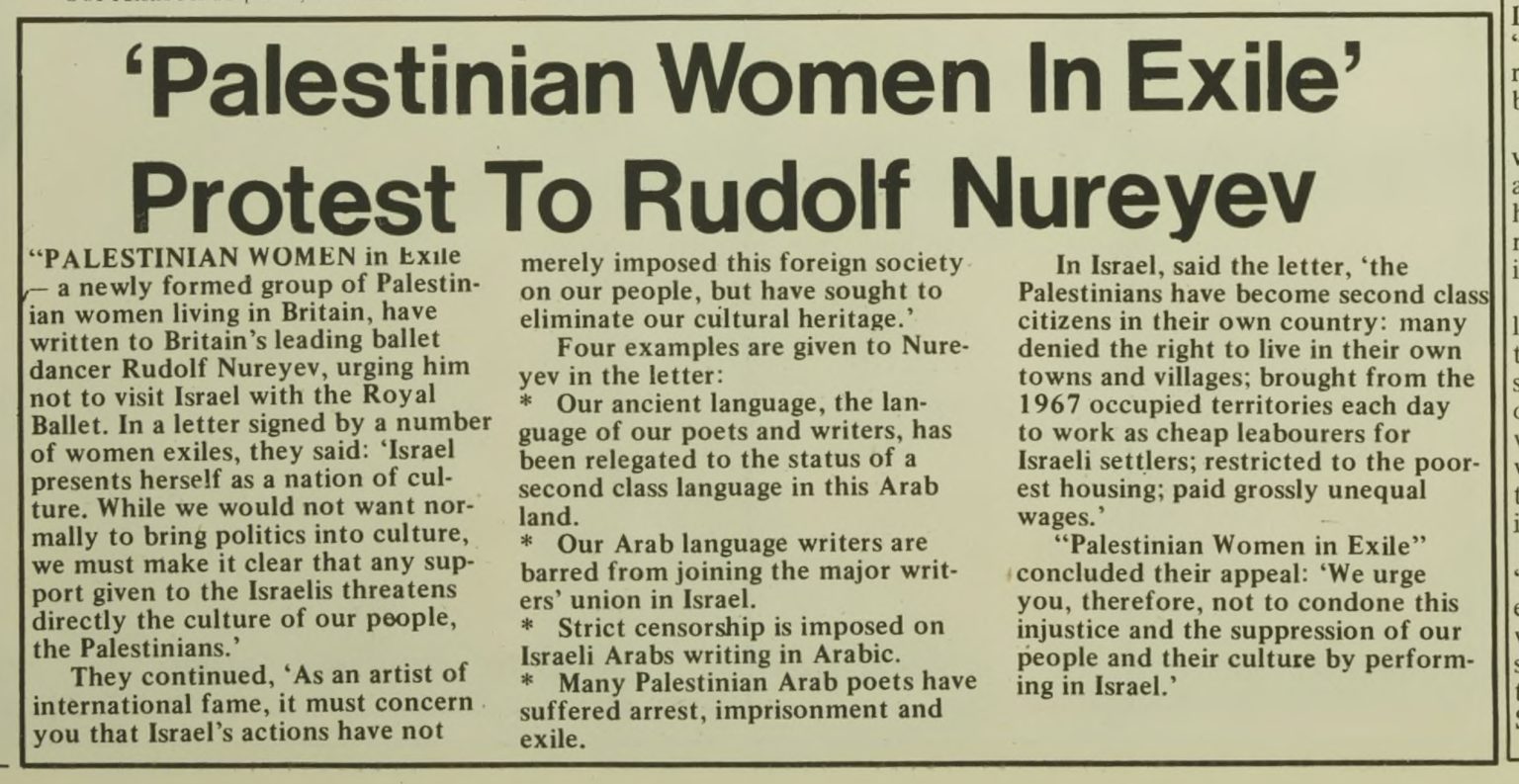
▴ Palestinian women in Exile: boycott request of ballet dancer Rudolf Nureyev to not visit Israel. Free Palestine (Sept 1973)
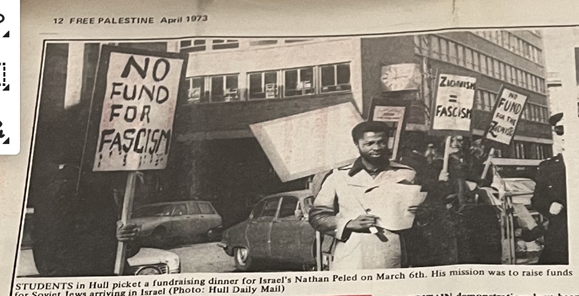
Hull protests in April 1973 against Israel Nathan Peled dinner to raise funds for soviet jews arriving in Israel. Free Palestine (April 1973).
Occupations and sit-ins also drew attention to the urgency of Palestinian demands. A 1968 sit-in by students in the United States demonstrated the transnational nature of student solidarity (November 1968). The statement issued in the magazine declares:
The Organisation of Arab Students in the U.S.A. and Canada is staging an uninterrupted sit-in on Wednesday and Thursday, October 30th and 31st, 1968, in the Permanent United Nations Missions of the United Arab Republic, Syria, and Jordan. The express purpose of the sit-in is an emphatic assertion of the following: (a) Any and all attempts at a so-called “peaceful” or “political” settlement that certain Arab governments are involved in, or contemplate involvement in, will invariably result in concessions which would undermine the cause of the People of Palestine and their inalienable rights in regaining their homeland and exercising national sovereignty.
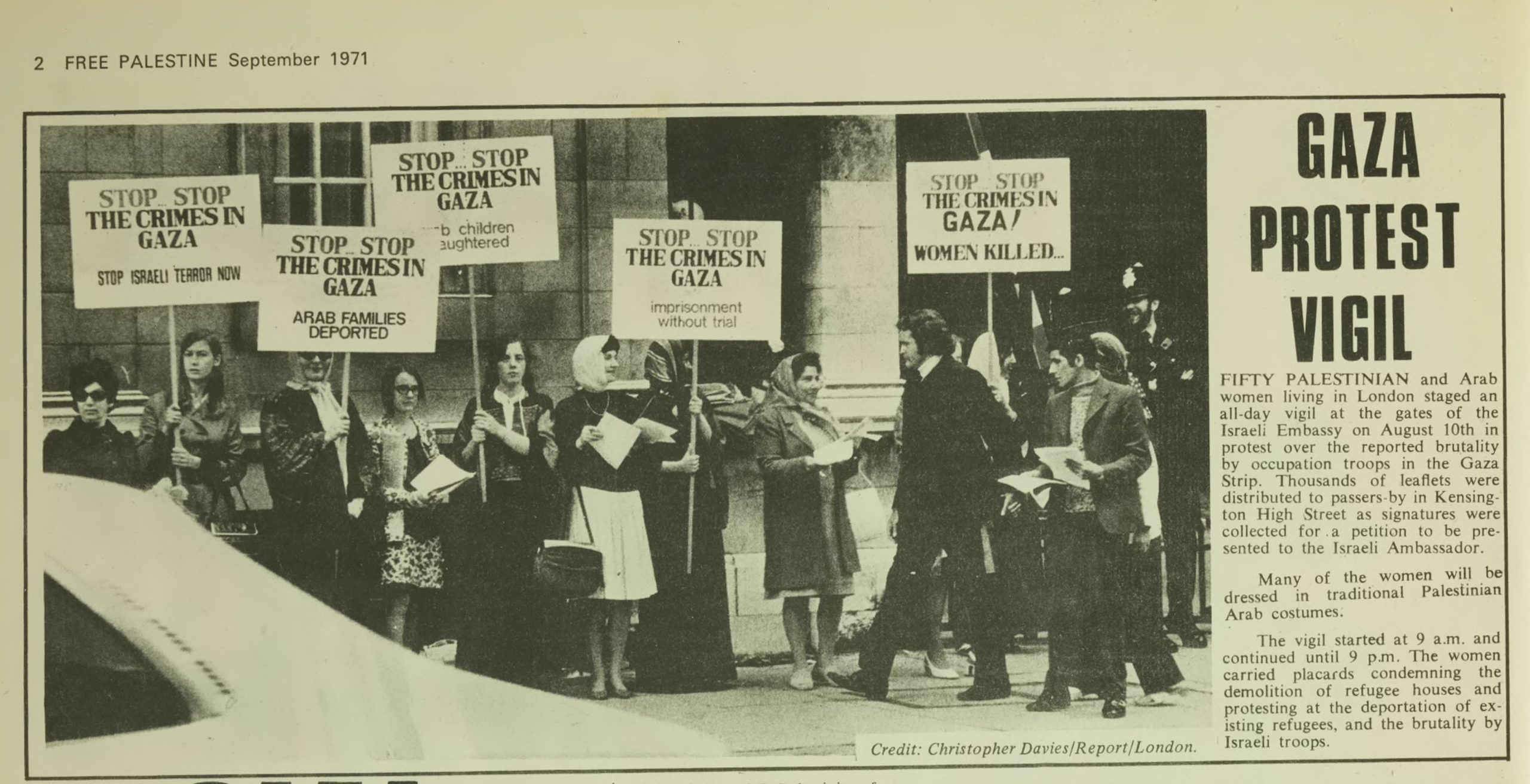
Gaza protests in london. Free Palestine (September 1971).
In May 1974, members of the General Union of Palestinian Students (GUPS) occupied the Arab League offices in London and Paris for three days (May 1974). This sit-in occurred in the context of rising Arab political activism and growing opposition to international diplomatic efforts that were perceived to compromise Palestinian rights, specifically, the upcoming Geneva Conference on the Middle East. The Geneva Conference, held in December 1973 under the auspices of the United Nations and co-sponsored by the United States and the Soviet Union, aimed to negotiate a political settlement between Arab states and Israel following the Yom Kippur War. Many Arab students and activists – and Palestinian leaders – viewed such negotiations with suspicion, believing that they would lead to capitulation and concessions at the expense of the Palestinian cause.
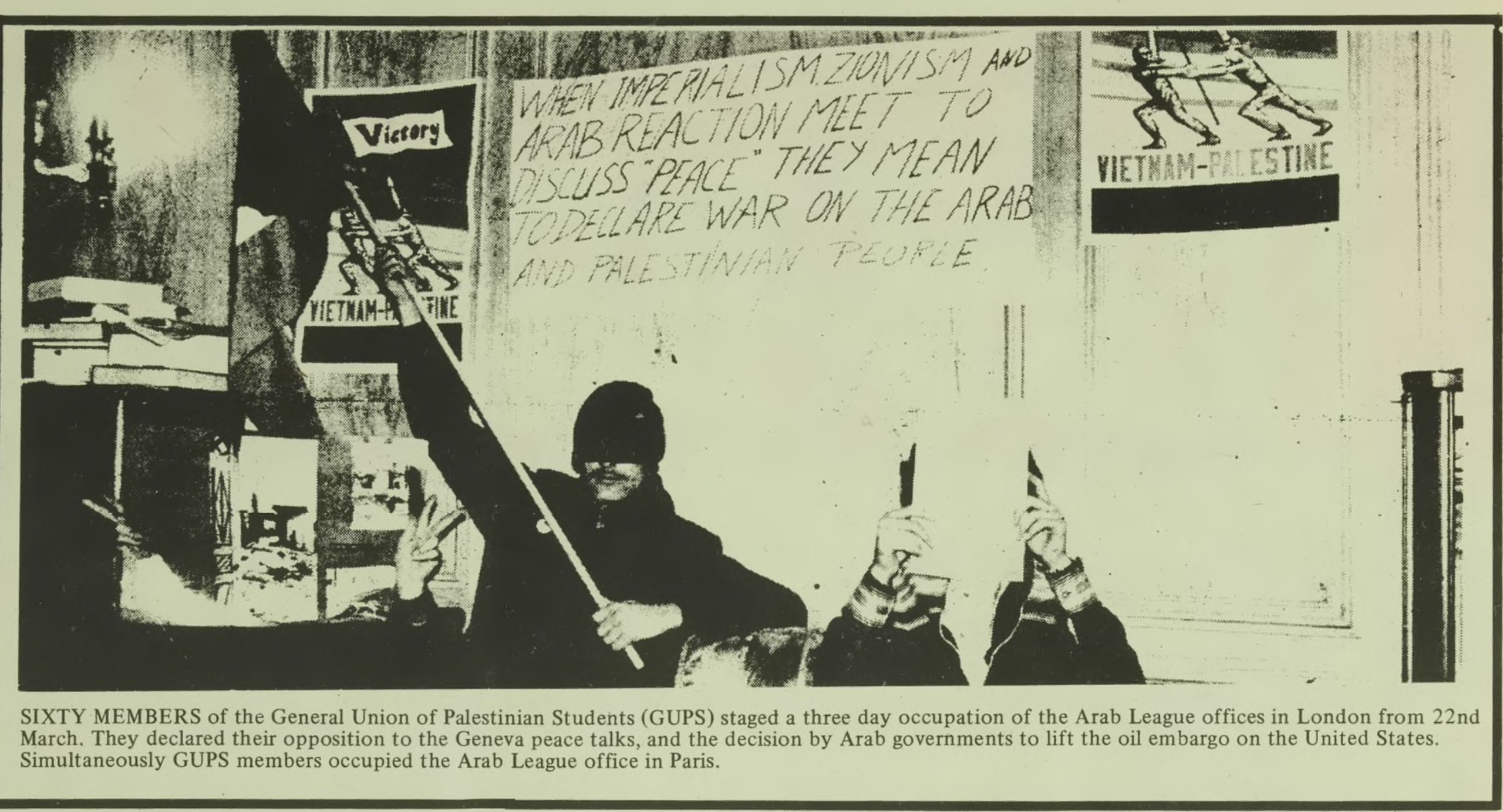
GUPS occupies the arab league offices in London and paris for 3 days. Free Palestine, (May 1974).
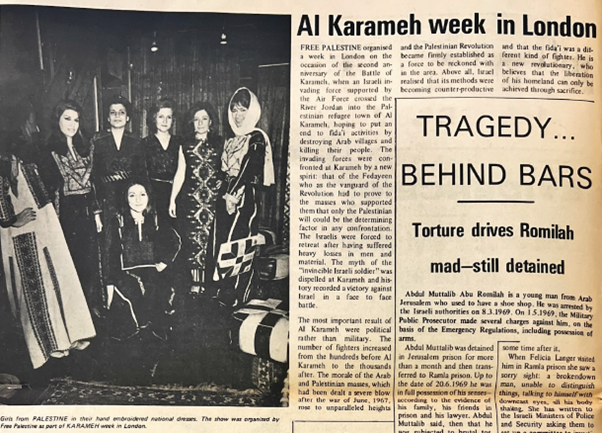
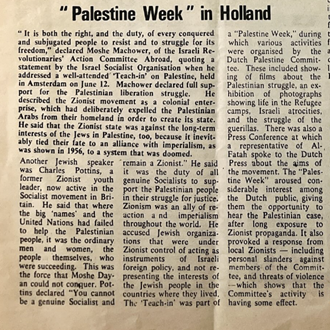
Cultural events were also often advertised in the magazine; such as Palestine Week in London and in Holland (June 1969 and July 1969), later renamed Karameh Week (April 1970) (in honour of the Battle of Karameh that launched the Palestinian Revolution). Such weeks often featured teach-ins, rallies, cultural exhibitions, and speakers from the PLO and activists across Europe, gathering around thousands of supporters.
Internationalism
Free Palestine offers an insight to the internationalism of Palestinian struggle and the connections being built between and across liberation struggles in different parts of the world. As part of this internationalism, the magazine fostered a participatory dialogue, publishing letters, comments, and exchanges between editors and readers. Contributors included renowned international figures, Arab societies in different countries, solidarity organisations, and politicians, activists and friends of Palestine. These dialogues reveal some of the sentiments of common cause that united people in solidarity, seen for example in a letter from Angela Davis:
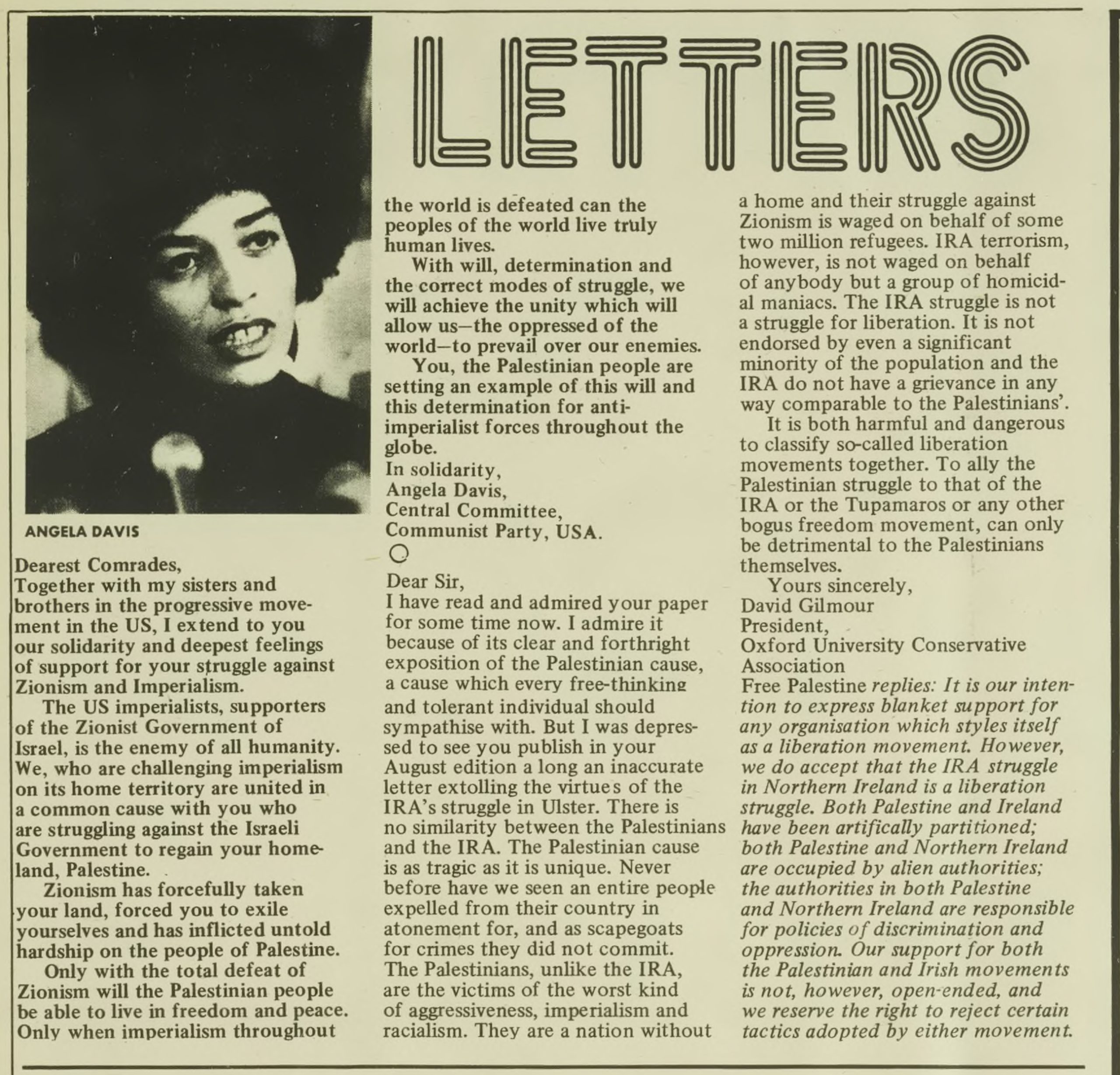
Free Palestine (October 1973).
Dearest Comrades,
Together with my sisters and brothers in the progressive movement in the US, I extend to you our solidarity and deepest feelings of support for your struggle against Zionism and Imperialism. The US imperialists, supporters of the Zionist Government of Israel, is the enemy of all humanity. We, who are challenging imperialism on its home territory, are united in a common cause with you who are struggling against the Israeli Government to regain your home land, Palestine…With will, determination and the correct modes of struggle, we will achieve the unity which will allow us-the oppressed of the world-to prevail over our enemies. You, the Palestinian people are setting an example of this will and this determination for anti-imperialist forces throughout the globe. In solidarity.
Angela Davis,
Central Committee, Communist Party, USA. (October 1973).
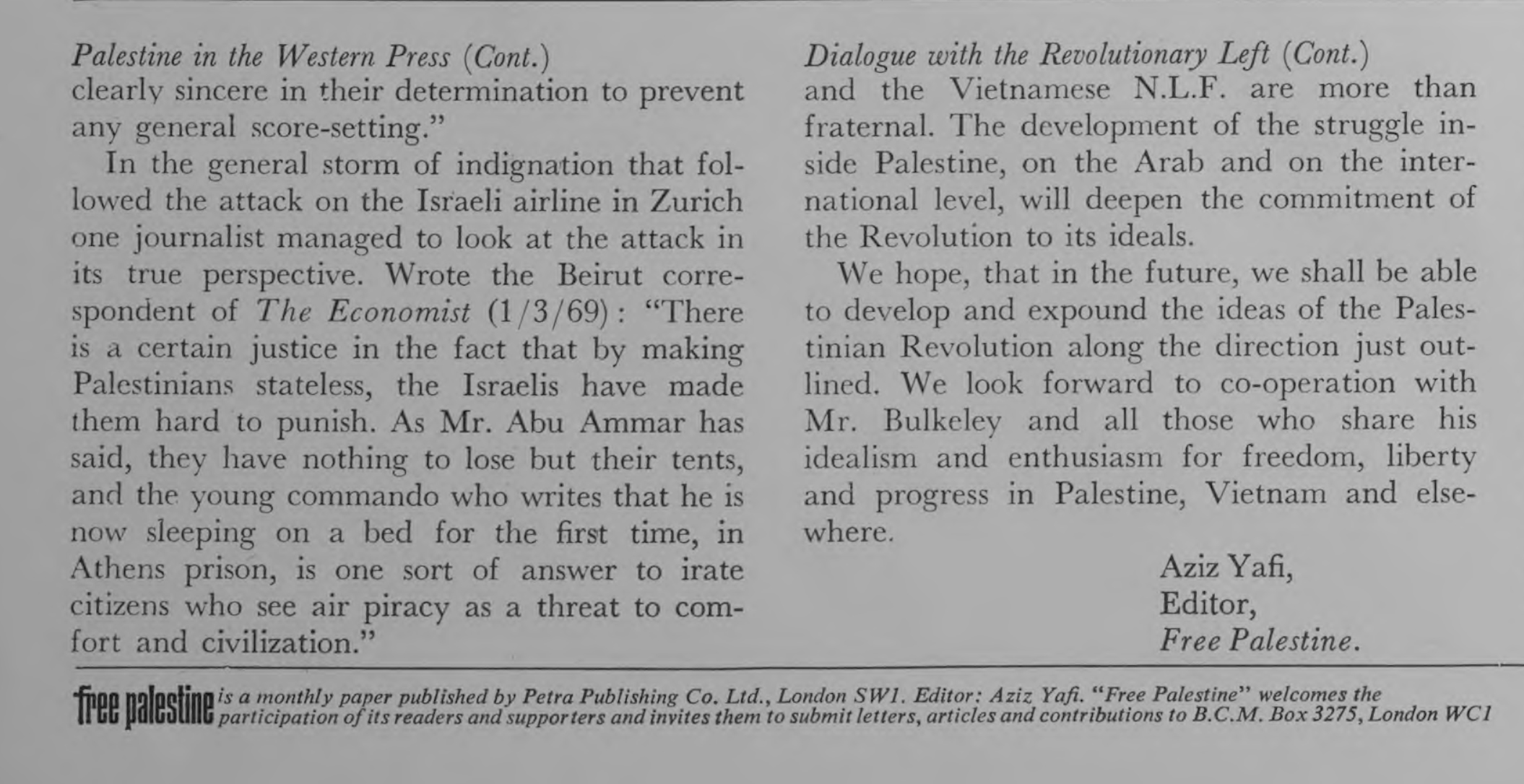
Continuation of a published dialogue between the Canadian branch of the Vietnam solidarity and Free Palestine. (March 1969).
The letters section reveals the complexities and debates within international solidarity movements, particularly around the question of armed struggle and national liberation. One of the sharpest exchanges centred on the Irish Republican Army (IRA), with letters defending its campaign against British rule in Northern Ireland by drawing direct parallels to the Palestinian resistance. Brendan Casey (reader from Dublin) forcefully argues that the Irish and Palestinian movements are fundamentally linked in their shared opposition to imperialism and partition, insisting that “the IRA long for the day when they will see their country free from the intrigues of imperialism.” He challenges critics who portray the IRA as sectarian, asserting that the organisation seeks a secular, united Ireland – just as the PLO envisions a democratic future for Palestine. Meanwhile, Brian Wilkinson (reader from Newport) calls out selective solidarity among activists who support Palestinian liberation but dismiss the Irish Republican struggle, suggesting a troubling double standard within leftist movements.
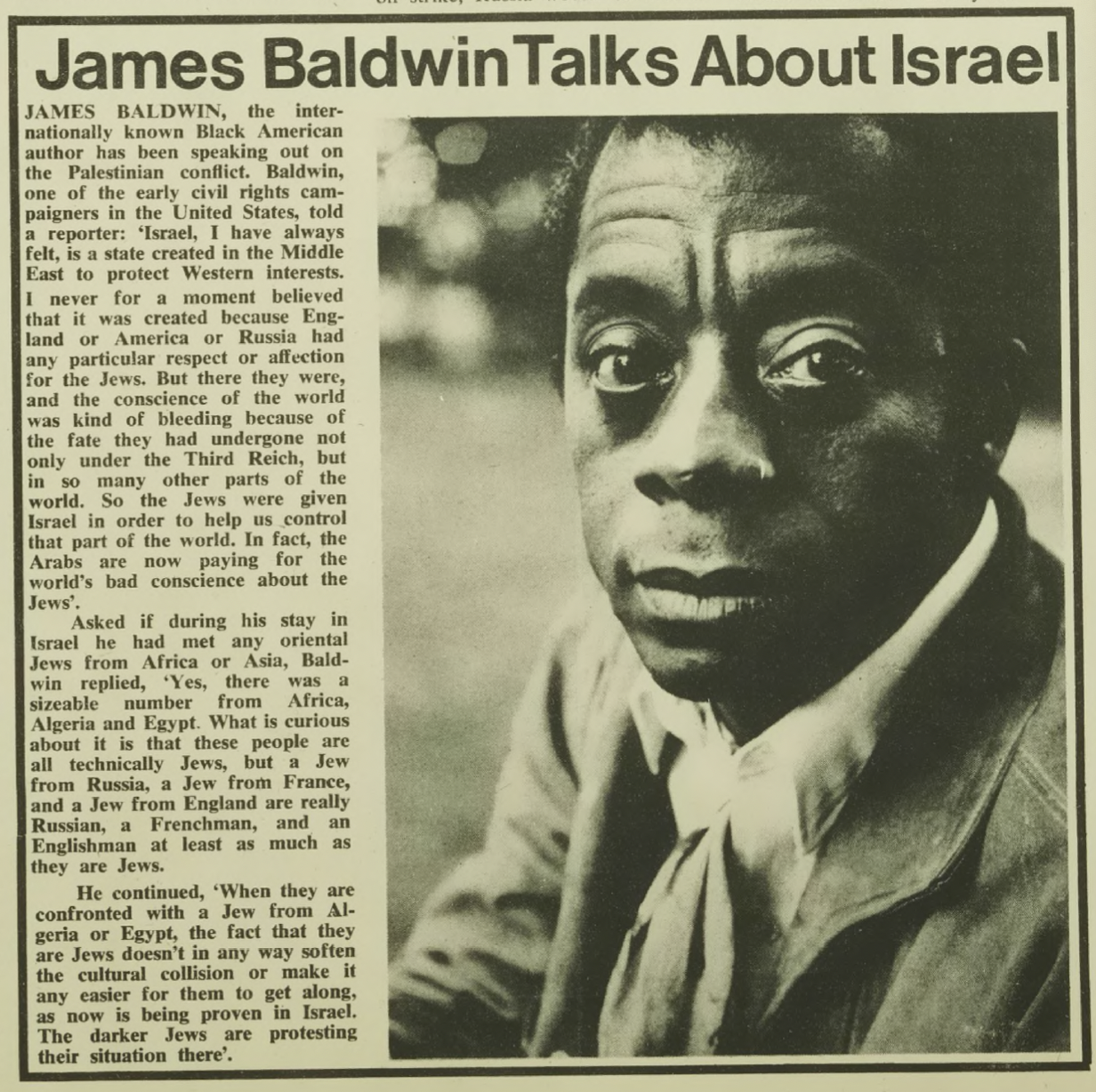
Free Palestine (January 1973)
This internal debate reflects broader tensions about the legitimacy of armed resistance and the boundaries of solidarity. While many correspondents express uncompromising anti-imperialist commitments, the paper itself maintains a more conditional stance. In response to these discussions, the editorial board states that “support to both the Palestinian and Irish movements is not, however, open-ended,” affirming its right to reject particular tactics used by either. Other letters; from the Irish Arab Society recounting the mistreatment of a Palestinian diplomat, and from the Finsbury Communist Association and Palestinian Medical Aid highlighting material aid and economic justice; further underscore the magazine’s role as a node of internationalist exchange. These correspondences, alongside a note from the Canadian Vietnam Solidarity Committee (March 1969), reveal the depth of global connections between anti-colonial struggles, even as they surface difficult and necessary political disagreements within them.
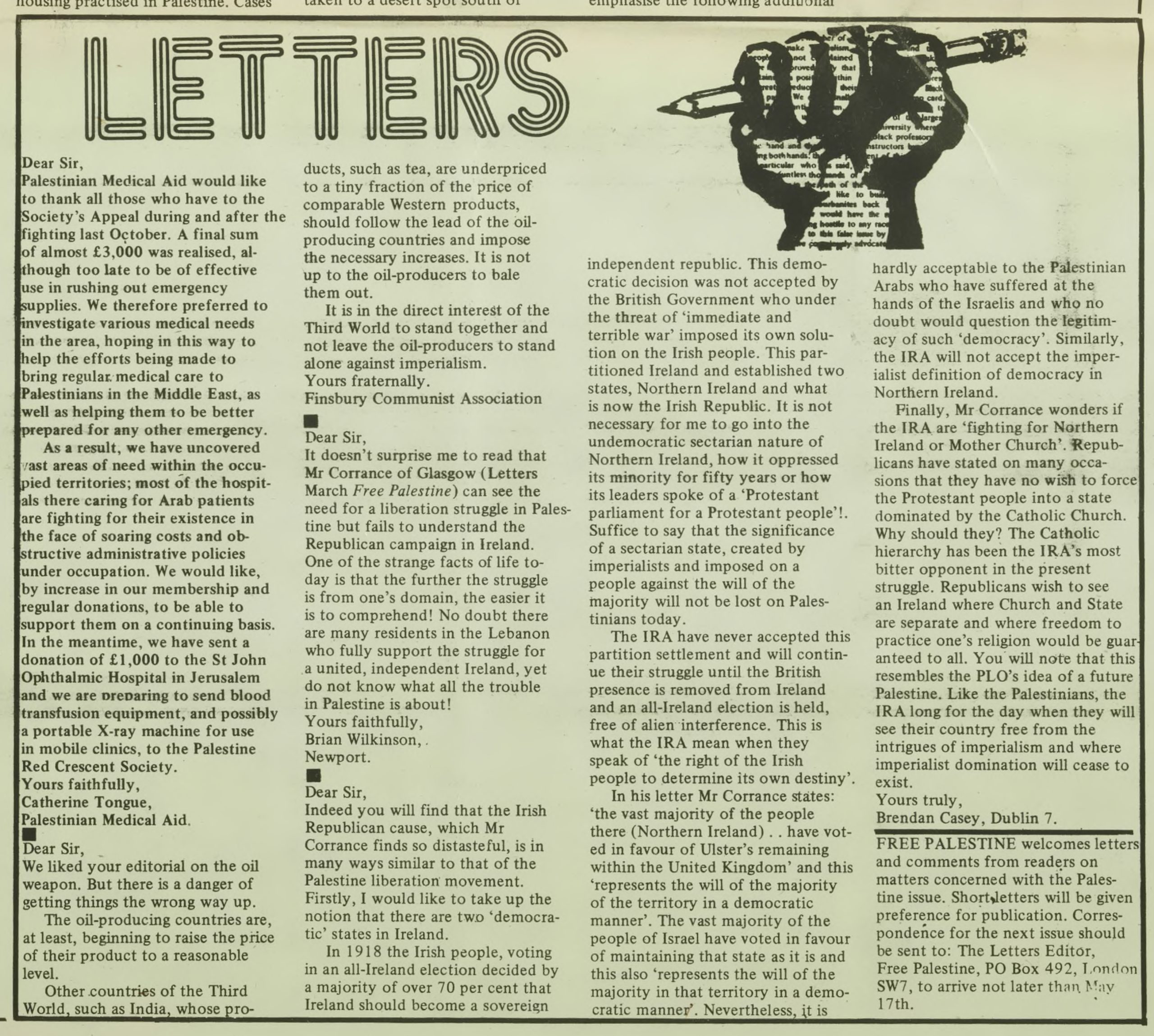
Free Palestine (May 1974).
As a site and source of knowledge exchange, Free Palestine draws multiple comparisons and highlights connections between the Palestinian Revolution and parallel struggles for liberation in Africa, Asia and Latin America. In doing so, Palestine is placed alongside other national liberation struggles in a transnational worldview of antiracism and anti-imperialism. This internationalist orientation is especially evident in a recurring section titled Liberation Notes (supplied by the Third World Reports Information Service), which provides brief but pointed updates on armed resistance and anticolonial movements around the world – from guerrilla struggles in Burma and Uruguay to uprisings in Namibia and Angola. By situating Palestine within this global matrix of revolutionary activity, the magazine affirms its commitment to a shared, cross-border struggle against imperial domination and racialised state violence.
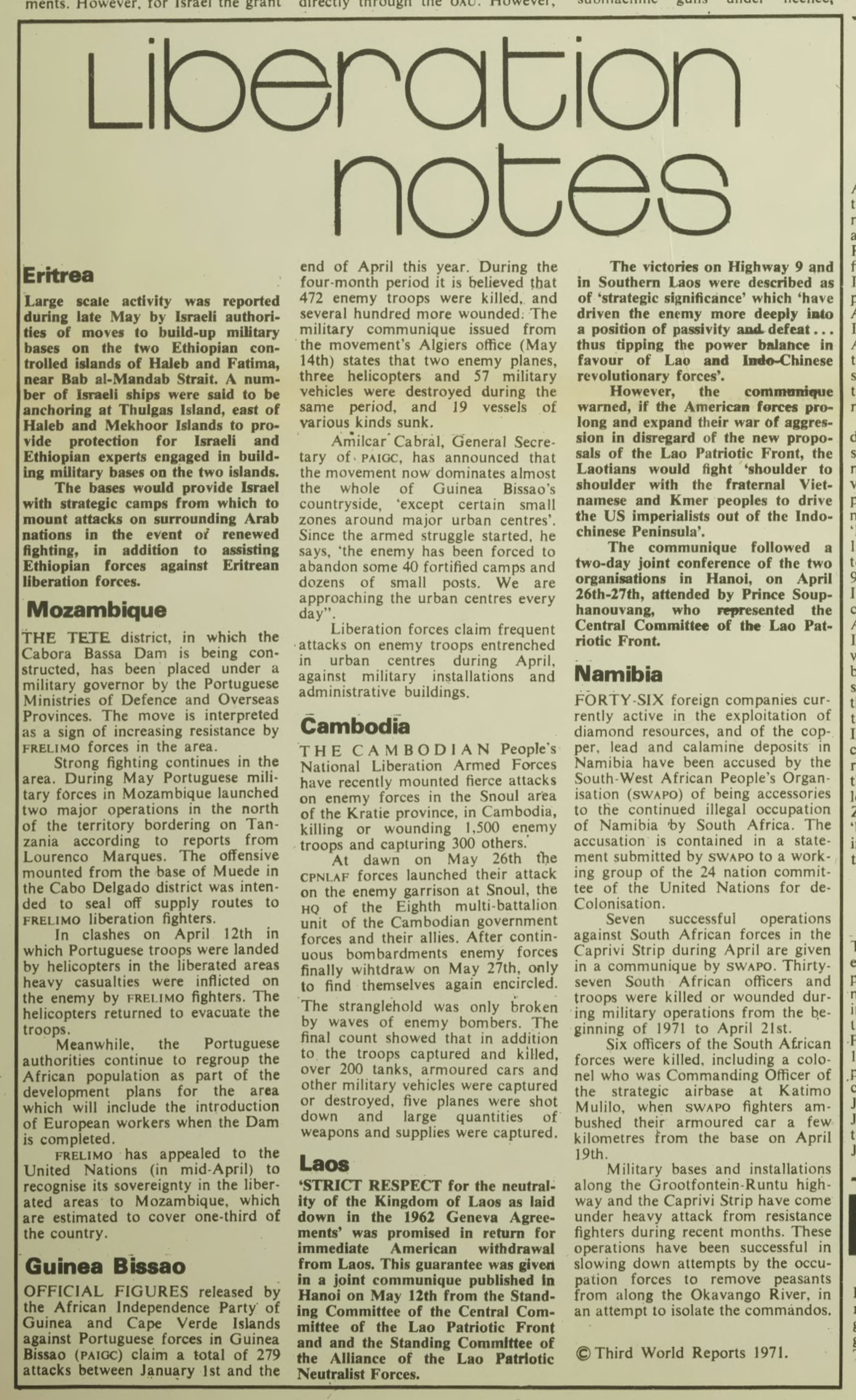
Free Palestine (July 1971).
The Anti-Apartheid Movement
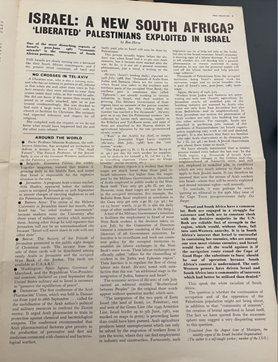
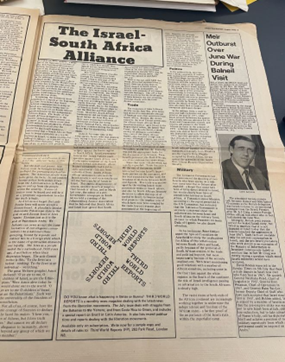
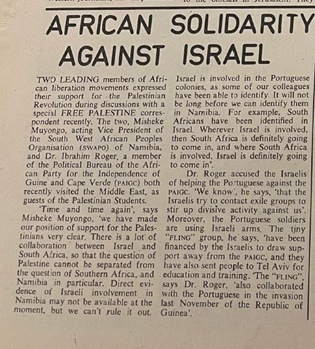
Significant amongst these internationalist examples was South Africa, and the anti-apartheid movement which had helped to illuminate the connections between Israel and reactionary regimes and organisations in Africa. Connections and comparisons between Israel and South Africa were presented in several long form reports in the paper.
Free Palestine
The people behind the publication were also actively involved in the African anti-apartheid struggle. Louis Eakes, a member of the Young Liberals and editor of Free Palestine from 1970-74, had organised the Stop the Seventy anti-apartheid campaign against the South African cricket team tour of England. Following this, he undertook a three-month tour of the Middle East at the invitation of Fatah. Upon his return, he spoke at events across Britain where he compared the liberation movements of the Middle East to those of Southern Africa, arguing that “the struggle against South African racism must also be directed against Israeli racism.”
Free Palestine
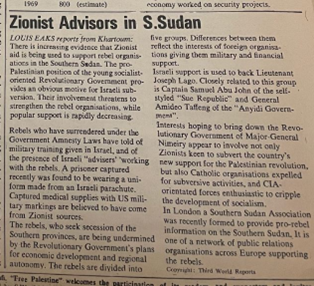
Eakes also wrote on the Israeli military and strategic support to rebel groups in South Sudan, while Free Palestine reported more broadly on the solidarity that existed in Africa against Israel, including from liberation movements such as the South West African Peoples Organisation (SWAPO) of Namibia and the African Party for the Independence of Guinea and Cape Verde (PAIGC), who highlighted the indivisibly of the question of Palestine from the question of Southern Africa. The paper also published in its section ‘London Notes’ about the complicity of UK-based banks in financing apartheid, highlighting Barclays’ operations in particular.
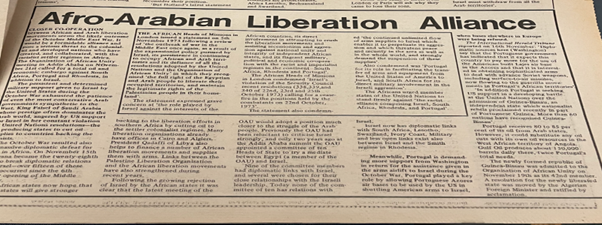
Free Palestine
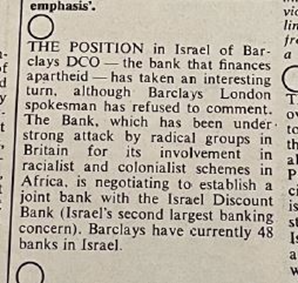
Free Palestine
Evidence of organisational connections, transnational solidarities and communication networks between the Palestinian liberation movement and antiracist and anticolonial organisations across the world can be found in Free Palestine, from groups fighting imperialism in Western Europe and North America (such as the Black Panthers and the IRA) to movements from the tricontinental arena of national liberation and anti-imperial resistance. As such, the paper offers a glimpse into the growing global support for Palestinian liberation in the late 1960s and 1970s, and the range of activities – such as conferences, summer camps, delegations, festivals and more – through which international solidarities were built and sustained. One such example is the International Youth Conference for Palestine held in Libya, attended by 500 delegates from around the world including representatives from the PLO as special guests, and 34 people from Great Britain and Ireland, members of diverse political organisations such as the National Union of Students, the Young Liberals, Labour Party Young Conservatives, Christians for Palestine, and the Union of Solidarity of Ireland, as reported on in Free Palestine.
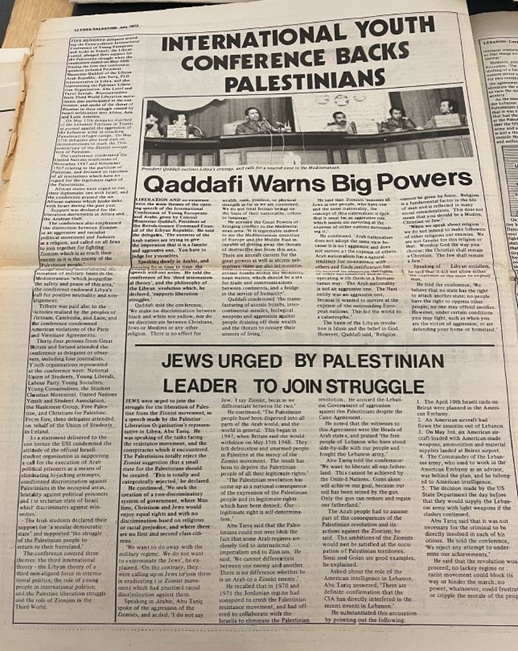
Free Palestine (July 1973).
With its detailed coverage of solidarity-building activities happening inside Britain, Free Palestine also points us to networks of anticolonial connectivity within the colonial metropole. Travelling representatives of renowned revolutionary organisations such as the African National Congress (ANC) or the Vietnamese National Liberation Front (NLF) would lead teach-ins or speak at public rallies, with such events advertised and reported on in the paper. And the participation of a broad spectrum of socialist and progressive groups in such activities illuminates the existence of an ideologically diverse anticolonial internationalism in Britain, found amongst New Left groups, in international solidarity campaigns, in antiracist networks, in student movements, in unions and in migrant communities.
Complicity, Censorship and Zionist Attacks
Despite media censorship, Zionist intimidation and institutional repression, Free Palestine persisted in exposing complicity and advocating for Palestinian self-determination. These acts of censorship also point to us the reach of the magazine, where it was read, and by who.
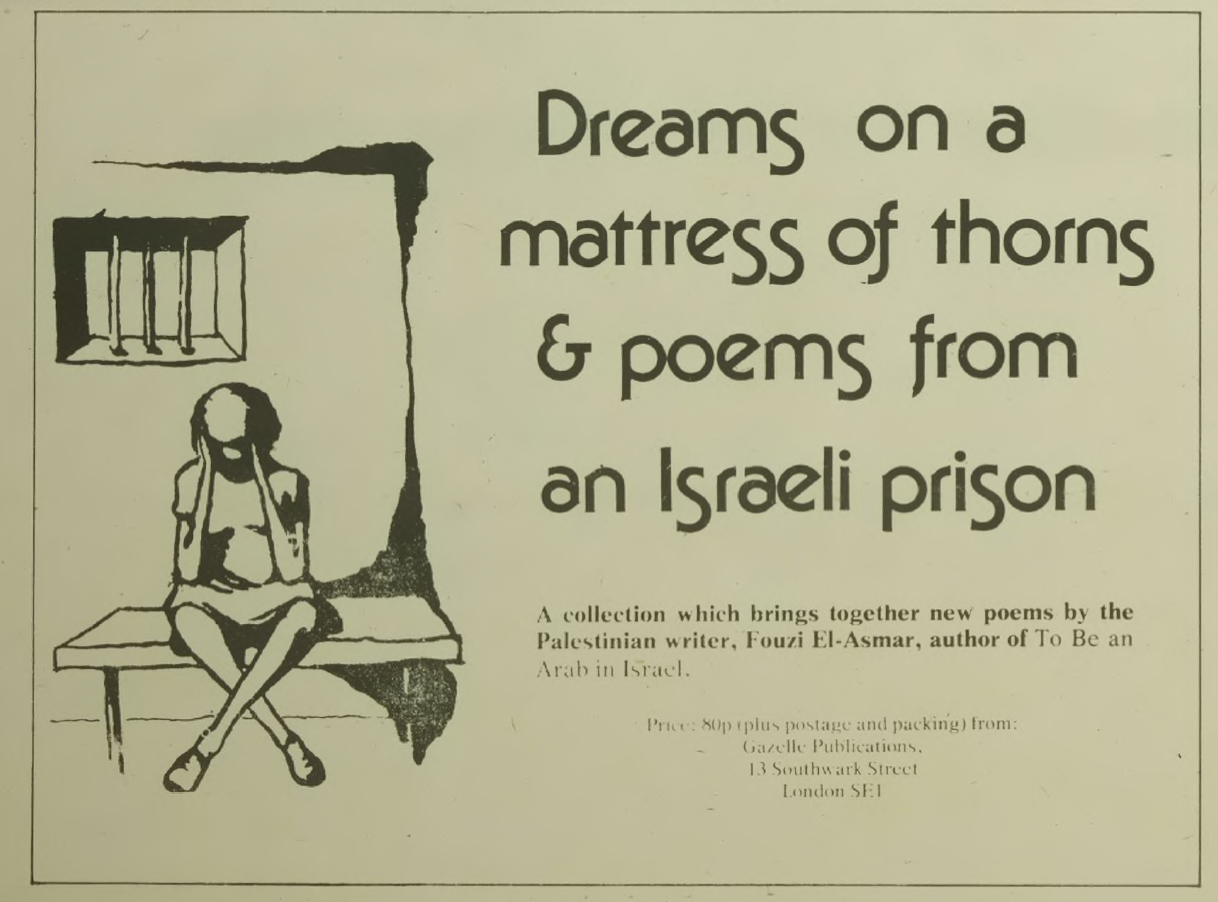
Free Palestine (December 1976)
For example, the January 1979 issue reported West Germany’s decision to censor copies of the magazine, destined to a political prisoner in a German jail. The report writes:
Christa Eckes, serving a sentence in Hamburg jail for alleged membership of the Red Army faction, received the October issue only after an article about the struggle of Palestinian prisoners in Israeli jails had been removed by the prison director. The excuse given for this censorship was that ‘the article could influence Ms Eckes negatively and lead her to resist prison wardens and prison regulations’ (January 1979)
Her lawyer told Free Palestine that: “this is just another example of the close collaboration between West German imperialism and Zionism”. (January 1979)
An article in the May 1981 edition covered a strange incident which the Free Palestinian editors took as a growing sign of willingness by Western governments to listen to the Palestinian point of view:
SHORTLY AFTER the publication of the February issue of Free Palestine a letter was received from the Foreign Office asking for their complimentary copy to be discontinued. The request was promptly processed, but a few days later, following the publication of the March issue, which reported the Foreign Office talks at which a meeting between Lord Carrington and PLO Chairman Yasser Arafat was discussed, the Foreign Office came through on the telephone. Apparently while other magazines had the story, the Foreign Office had not received a copy of Free Palestine. Could they send a messenger to collect a copy, they asked. Meanwhile, the American Embassy in London has written requesting a copy of Fayez Sayegh’s excellent analysis of Palestine and the Camp David Accords. Published by the Libyan People’s Bureau in London as part of the Arab Dawn Reports series, the analysis was published in late 1978. Could it be that at last the State Department is prepared to listen to criticism of Jimmy Carter’s self-proclaimed major achievement in foreign policy? (May 1981)
Zionist organisations also frequently targeted activists with intimidation and defamation campaigns. The July 1969 issue detailed attacks on PSC members in London during a picketing of Golda Meir’s visit to London, and other activists in Frankfurt when they attempted to challenge a speech by the Israeli ambassador in the University of Frankfurt. The article writes that these groups of thugs in Britain are not random but: “an organised band of Zionist “heavies” that considers as its prime duty the overcoming of public Palestinian activity by acts of violence and vulgarity. Some of these thugs can be seen at Speakers Corner every Sunday shouting abuse and threatening Palestinians trying to present their case to the public.” Meanwhile in Frankfurt, “Palestinian students were attacked by thugs, hired by Zionists” and left to fend for themselves:
Some of the Palestinian students were taken to hospital and the West German police afforded no protection whatsoever to them and refused to investigate the incident. The West German press and authorities hurriedly offered their “apologies” to the Israeli ambassador and dutifully, and predictably paid homage to Israel, a common and insidious manoeuvre that the West German authorities have mastered in hypocritically “atoning” for Nazi crimes.
These attacks, Free Palestine writes, emerged from an attempt to stifle political discussion on Palestine and respond to a rise in pro-Palestinian sentiment:
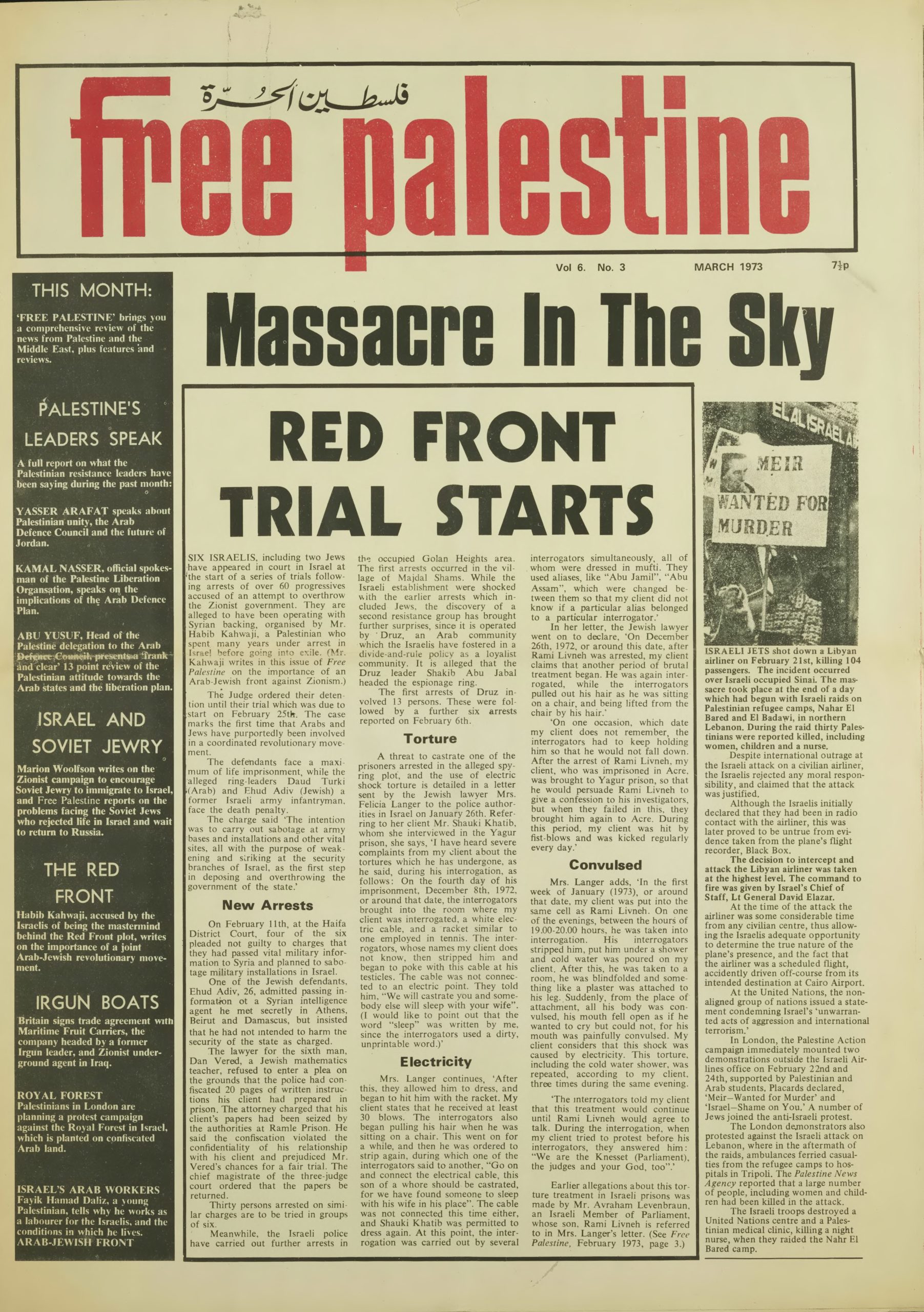
Free Palestine (March 1973)
The reasons behind this mounting phenomena of Zionist violence are not hard to discover. The Zionists are beginning to realise that the Palestinian case is not only having a hearing, but is recruiting considerable support, particularly from among left-wing and progressive sections in western society. Being fascists by nature, the Zionist organisations could only resort to fascist tactics to counter, and attempt to silence the voice of progress and justice. It remains to be pointed out that while the Palestinians and their supporters will not resort to the despicable tactics of the Zionist hoodlums, they are determined to defend themselves against these fascists, particularly in view of the suspect attitude of western police forces.
Violence was also reported in London against the GUPS president Nouri Al Bahrani, attacked in October, 1969: “the zionists cut him across the face and body with a knife and warned him that he and other Arabs will be victims of further, more serious attacks unless they refrain from activities in support of Palestine.” (October, 1969). These attacks did not stop, and were also reported in France and other European cities, such as the attack on the ‘Movement against anti-arab racism’ and another on the ‘le Front des Jeunes Progressistes’, with “one of them, Michael Deleau, from the Belgian committee of Solidarity with the Palestinian resistance and the Arab peoples, was beaten up in the street, and suffered a skull fracture”. Another, the president of the same committee, “himself of a Jewish family, has been injured… when a car was driven at him” (July 1970). These incidents were often reported to Free Palestine and covered in their issues.
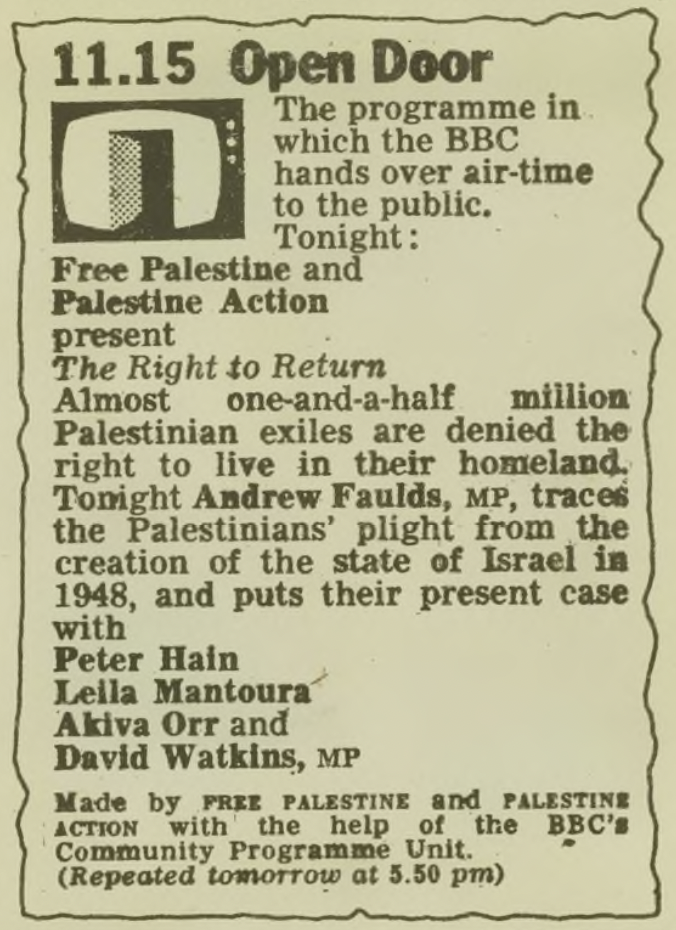
Free Palestine (December 1976)
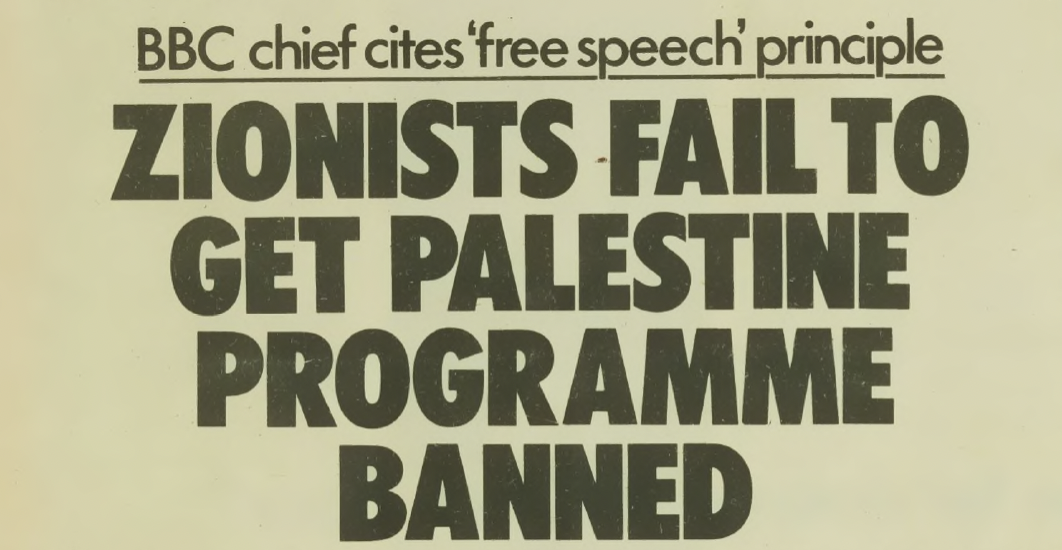
Free Palestine (December 1976)
Free Palestine also played a crucial role in exposing the complicity of politicians, businesses, and media outlets in sustaining Israeli colonialism. For instance, a February 1969 article revealed the United Kingdom’s Prince Philip’s involvement in fundraising for Zionist causes, while a June/July 1984 report highlighted Prime Minister Margaret Thatcher’s support for pro-Israel policies within the Conservative Party. The campaigns also targeted figures such as the crew of Apollo 12, where a call in February 1970 was written against their planned visit in April 1970 to the occupied West Bank to plant trees.
The magazine further documented media bias, holding outlets accountable for their portrayal of the Palestinian struggle. A March 1975 article by Fawaz Turki titled “Bias and the Press” analysed how mainstream media distorted Palestinian narratives, reinforcing stereotypes and downplaying Israeli aggression. In a rare instance of accountability, the Jewish Chronicle publicly admitted to misrepresenting Palestinian activists, as reported in February 1969, demonstrating the impact of sustained advocacy.
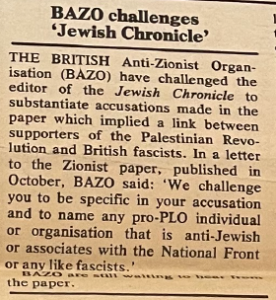 Censorship extended beyond political discourse to include Palestinian cultural production. For example, a July 1973 article reported on WH Smith’s refusal to sell Leila Khaled’s autobiography, My People Shall Live, citing its portrayal of armed resistance. Similarly, Israeli pressure led to the banning of Palestinian films and literature in European cultural institutions, reflecting broader efforts to suppress Palestinian voices in the cultural sphere. Despite these challenges, Free Palestine and its supporters found innovative ways to circumvent censorship and maintain visibility. Activists responded to attacks with public statements, petitions, and direct actions, refusing to be silenced. For instance, the British Anti-Zionist Organization (BAZO) challenged defamatory articles published in the Jewish Chronicle, forcing the magazine to retract its claims in December 1976.
Through its coverage of censorship and intimidation, Free Palestine built solidarity with other movements facing repression, ensuring that attempts to silence Palestinian voices did not go unnoticed. By documenting grassroots activism, amplifying Palestinian voices and exposing complicity, Free Palestine – and other publications (such as The Source, below) inspired by its mission and approach – laid the groundwork for future generations of activists whose struggles continue to echo the spirit of resistance embodied in these pages.
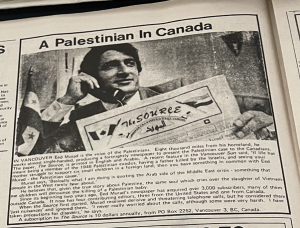
Free Palestine has inspired others to take the lead in starting their own magazines in exile. See ‘The Source’, founded by Eed Murad in Vancouver, Canada in 1971 and this interview was published in Free Palestine 1973.
British Trade Unions and the Left
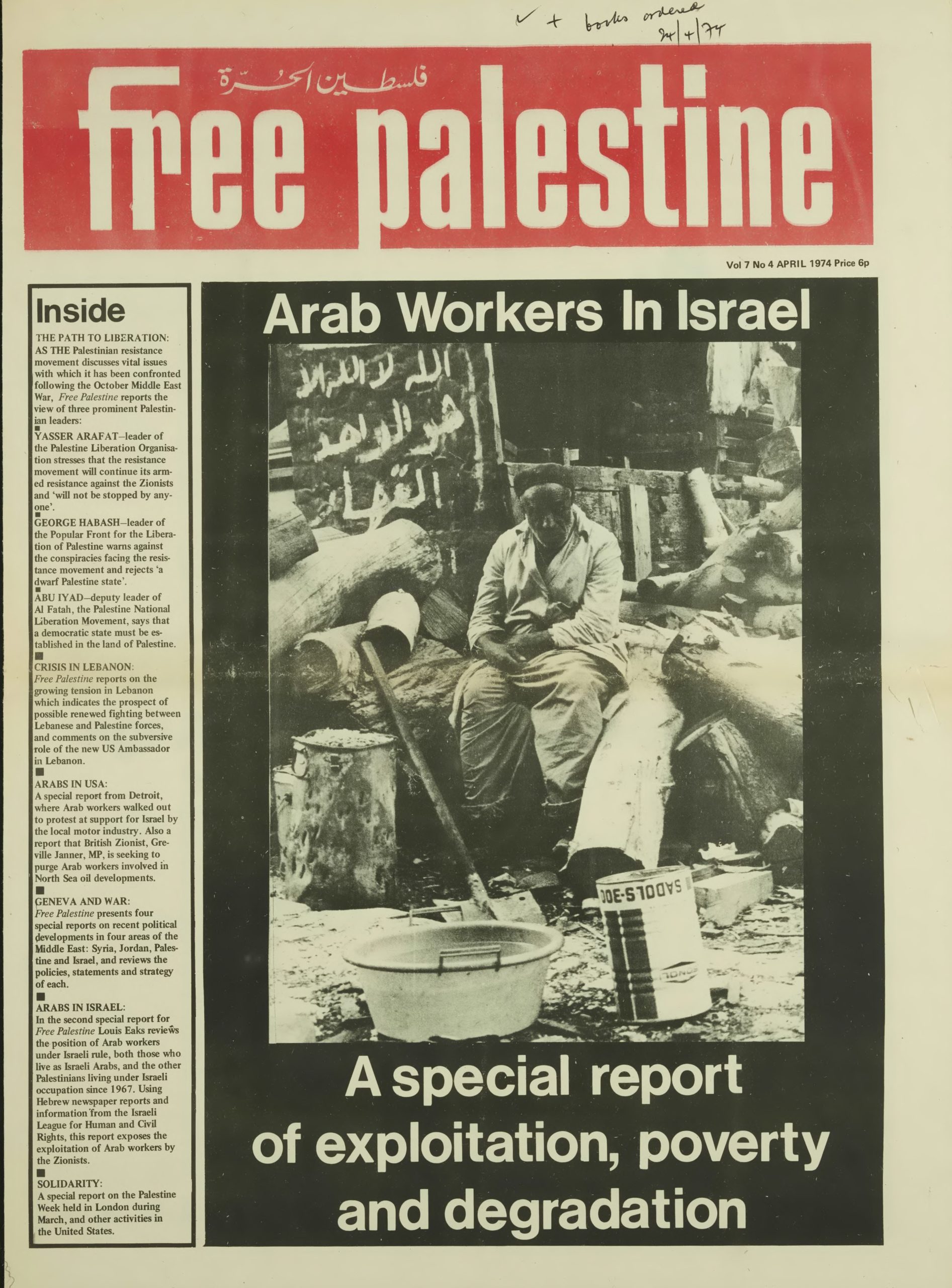
Free Palestine (April 1974)
Another crucial sector discussed in the Free Palestine magazine, and whose political activities are documented throughout its issues, were the British left and trade union movement.
Since the start of the Zionist takeover of Palestine, the British left had an ambiguous position towards the cause of Palestinian freedom. Significant sections had been won over by the socialist rhetoric of the Zionist labour movement, focusing on the left-wing principles they espoused whilst ignoring the colonial and racial exclusivist nature of their project. Even the Movement for Colonial Freedom, a Labour, leftist and trade union alliance established in 1954 to oppose colonial intervention globally was divided on the ‘question of Palestine’.
The Free Palestine magazine documents the attempts by Palestinians and their supporters to establish Palestine firmly in the internationalist current within the trade union movement, the British left and amongst MPs. They did this by regularly reporting on the working conditions of Palestinian labourers, including short reports and interviews, as well as actions by the Palestinian and Arab trade union movement, including the regular mobilisations and strikes that took place throughout the period of its publication.
The paper also documents the range of tactics employed by the trade union movement in Britain in building solidarity with the Palestinian trade union movement. This includes coverage of statements issued by British trade unions and activities intended to build connections between Palestinian workers and workers in Britain, day schools, platforming Palestinian trade union speakers and organising delegations and commissions of enquiry to Palestine.
Palestinian Workers and Trade Unionism
A running theme throughout Free Palestine’s reporting are the conditions and mobilisations of Palestinian workers. These mainly appear as short reports in the Palestine Briefing section of the magazine, but occasionally were documented in longer articles and interviews. One 1974 edition, for example, led with a front page focusing on “Arab Workers in Israel: A special report of exploitation, poverty and degradation”, which includes a detailed interview with a Palestinian worker inside 1948 Palestine describing his working conditions.
Attention to the plight of Palestinian workers appears in the very first issues of Free Palestine, charting the development of Israel’s economic model and patterns of labour exploitation in light of its 1967 illegal occupation of the West Bank and Gaza. An October 1968 edition carried a translation of a report from the Israeli leftist organisation Matzpen asking whether Israel was on course to become a ‘New South Africa’ in creating a large surplus labour force:
This system was already established by late 1968, with Palestinian labourers earning around a third of the wages of Jewish workers, which the piece describes as leading to “the creation of brutal Apartheid in Israel itself”, a theme elaborated on in a March 1972 edition when reporting on Israel’s refusal to lift restrictions on the number of workers from the occupied territories permitted to work inside 1948 Palestine. The Israeli dependency on Palestinian labour this created is described in the January 1979 edition when the Israeli military regime closed all transit points into 1948 Palestine for Palestinian workers, with dire economic consequences. A brief report in the March 1973 edition reported on Israel’s kidnapping of three workers, as part of efforts to disrupt the orange harvest in Gaza. The February 1982 issue of the paper reported on the restrictions placed on three Palestinian trade union leaders, including the prominent trade unionist and writer Ibrahim Dakkak, who were banned from leaving Jerusalem.
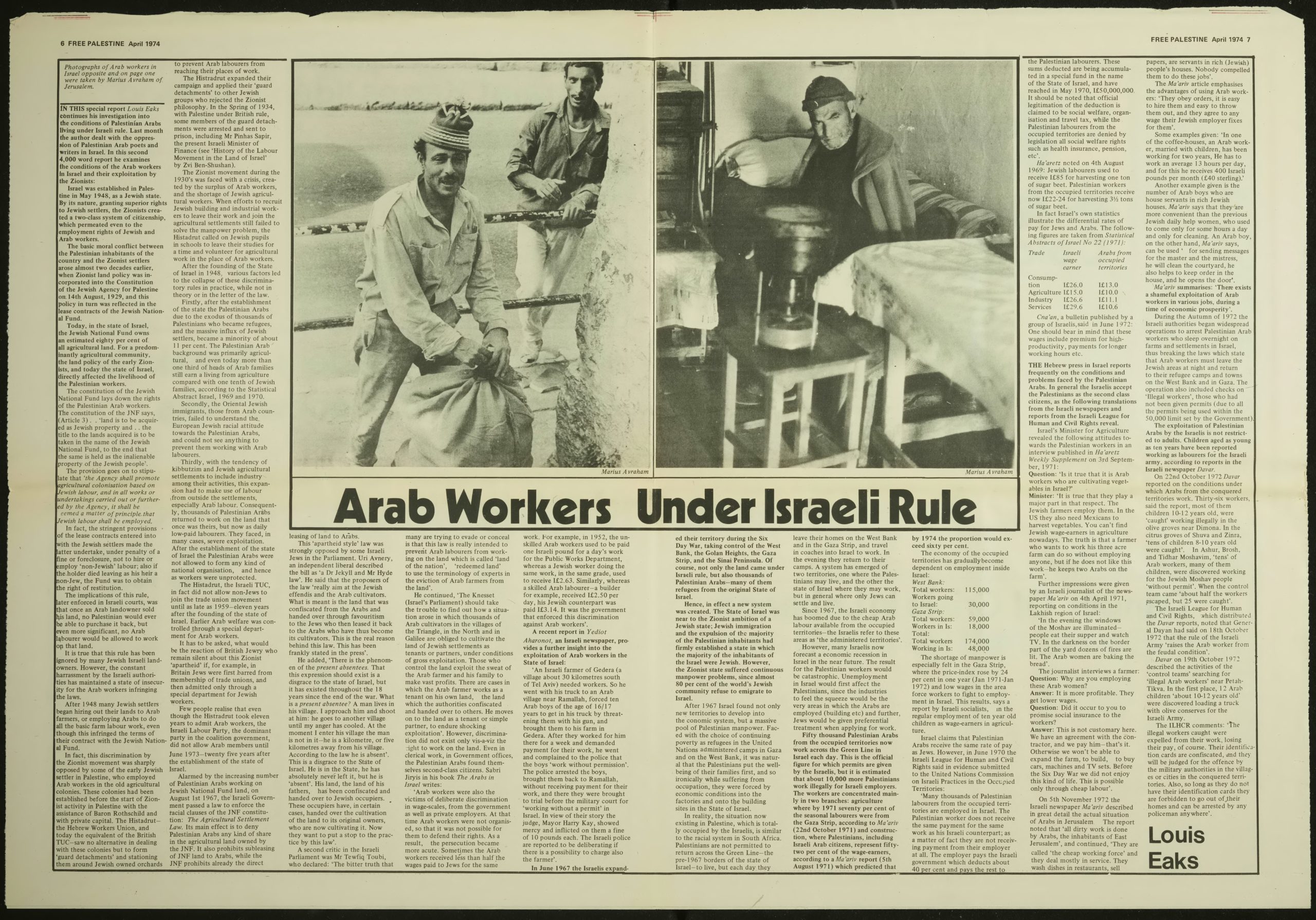
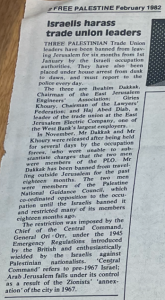
Free Palestine (February 1982)
The paper also regularly carried news of Palestinian and Arab trade union activities. This mainly consisted of documenting trade union struggles in occupied Palestine, and the often extreme Israeli response. In September of 1971, for example, Free Palestine reported on Israel’s crushing of a week-long strike in Gaza: demolishing homes, welding shut shop doors and revoking the driving licenses of workers participating in the strike. Similar strikes were reported in February of1982 which registered the mass protests that erupted across Gaza in opposition to tax increases and attempts to impose permanent Israeli rule, during which a child was killed by Israeli soldiers and thousands arrested. In mid-1981 the magazine reported a notable victory for Palestinian teachers in the West Bank who, after a fourteen week strike, forced the Israeli military authorities to concede a 75% pay increase.
The paper also covered news of Palestinian union activity amongst exiled Palestinians, such as demands by Palestinians in Germany that they lift the ban on the General Union of Palestinian Students (GUPS) and Palestinian Workers Union (December 1973). It also sought to explain the dynamics of sectoral unions, such as GUPS within the wider national liberation movement, with an entire page of the January 1979 edition given over to its history, organisational structure and political platform.
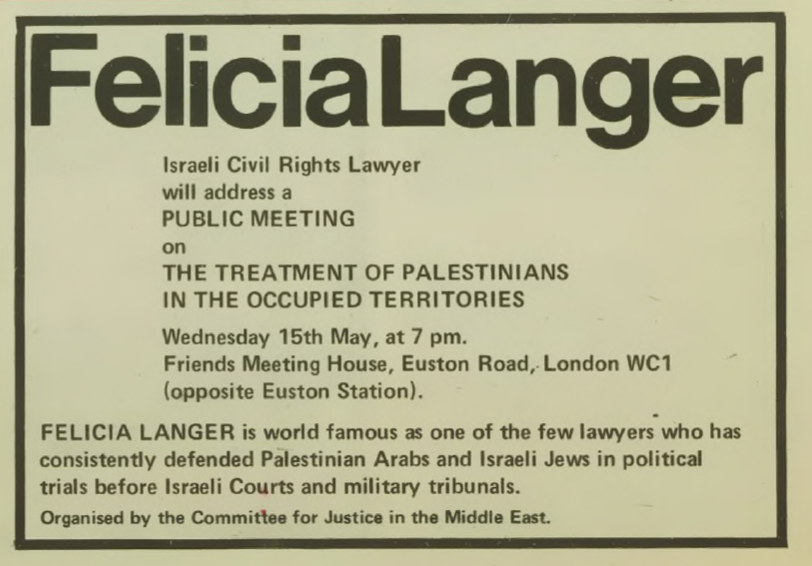
Free Palestine (December 1974)
Documenting Trade Union Solidarity
The Free Palestine magazine documents the nascent efforts to establish a foothold for discussions of Palestinian liberation in the public sphere in Britain, against a hostile media and political establishment. This extends to the left and trade union movement, where voices advocating for Palestinian rights were gaining traction.
Many unions issued statements of support. For example, a 1973 declaration made by Transport and General Workers Union at the Ford Dagenham plant declared that:
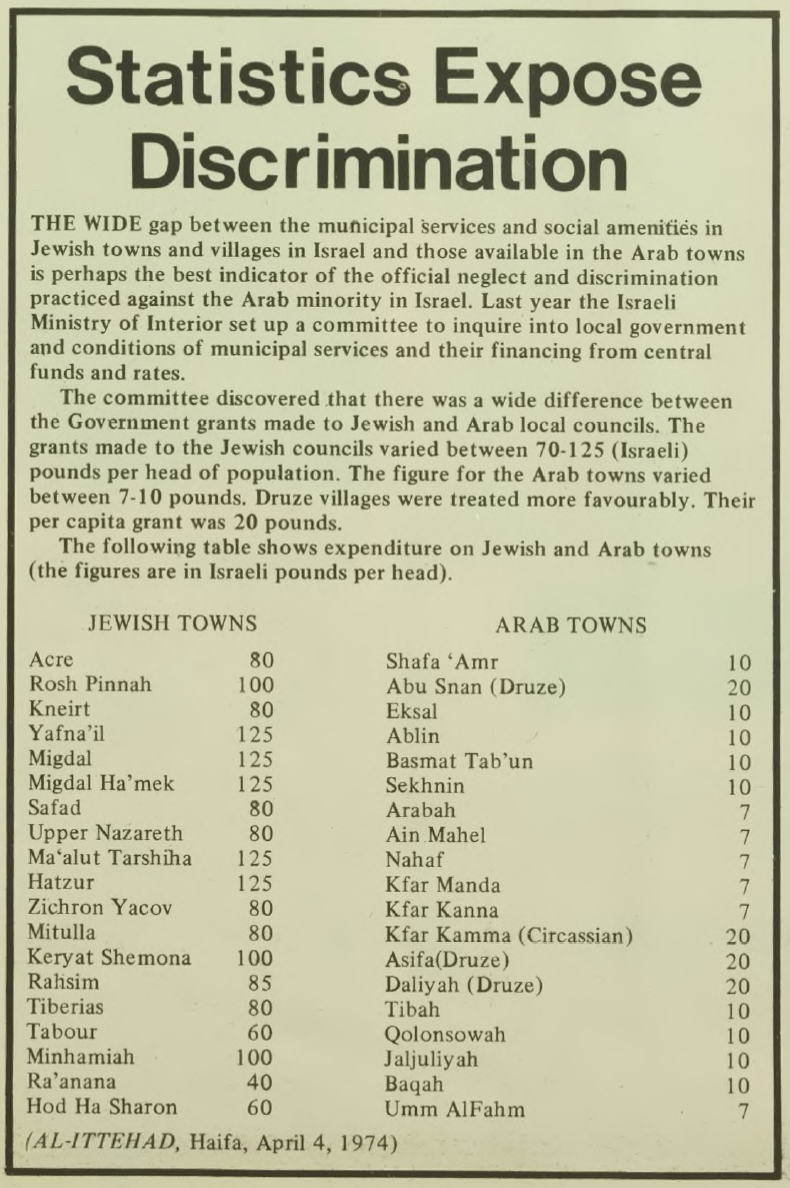
Free Palestine (May 1974)
Whilst most statements were general in support, others were directed at raising awareness of specific issues, such as a statements objecting to the arrest, torture and execution of trade unionists in Jordan (May 1973) and the bombing and invasion of Lebanon (May 1981). Another consistent theme were demands for the British government to recognise the PLO, such as by the annual conference of the Association of Cinematographic and Television Technicians (Jun/July 1984). Beyond statements, trade unionists also undertook actions designed to have an economic impact, such as the objection of the Australian Builders Union to an Israeli financed building initiative following lobbying from the Palestinian-Australian Solidarity Committee (May 1973).
In later issues, the magazine reported on attempts to formalise trade union solidarity work with Palestine through the establishment of bodies such as the Labour Middle East Studies Unit (LMESU) and Trade Union Friends of Palestine (TUFP). The former of these, LMESU, was established in 1978 as the education arm of the Labour Middle East Council, complimenting its parliamentary and trade union advocacy work with “intensive seminar programmes for key local and national office holders in the British labour movement” which were aimed at “opening up an entirely new front for the propagation of the Arab point of view” (December 1978). The seminars were delivered to elected shop stewards and staff representatives nominated to attend by their regional or national executives, or local trade councils. The focus on trade unions was owing to their “peculiarly important institutional position in Britain” and their being “powerful in many areas of national life” making them a “vital field” for mass advocacy for Palestine.
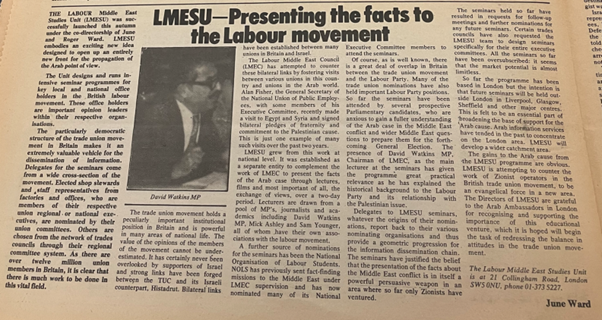
▴ Report on the launch and activities of the LMESU. Free Palestine (December 1978)
Free Palestine (June 1976)
The TUFP, meanwhile. was launched at a meeting in Dundee addressed by the then PLO representative Nabil Ramlawi who spoke about the vital role of the trade union movement in building solidarity with Palestine (November 1980). A year later, the newspaper ran an enthusiastic headline: ‘The Conspiracy of Silence in Trade Unions is Broken’, reporting on the TUFP’s activities which had included passing further motions in their unions and receiving a delegation from the Palestinian Trade Union Federation, who met with a variety of workers and trade union and Labour officials. The TUFP’s plans for the coming year included passing motions, organising speaker tours and “a campaign to sell shares in the retail consumer cooperatives operating in Palestinian camps near Beirut’. The February 1981 edition has a detailed description of one TUFP delegation to the Palestinian Trade Union Federation in Lebanon, led by Ernie Ross MP, where they met Palestinian fisherman and farm workers, and learnt about the Palestinian co-operative movement, whose work they had been supporting (February 1981).
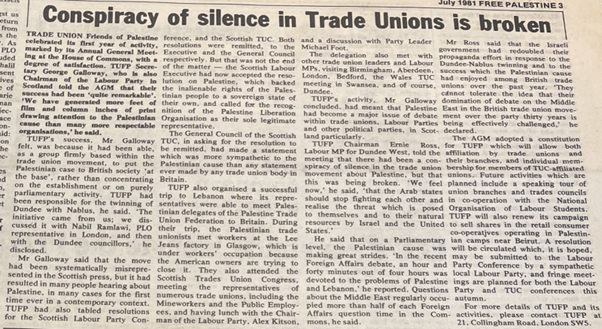
▴ Free Palestine (July 1981)
These initiatives came under consistent pressure from pro-Zionist lobbyists. For example, the Bradford Labour Movement Campaign for Palestine Solidarity faced considerable obstacles to a day school it had organised at Bradford University on the topic of ‘Labour and Apartheid in Israel’ (July 1981). The event went ahead but was faced with threats from Zionists beforehand, pressure on the university and student union to cancel the meeting and persistent disruptions on the day itself.
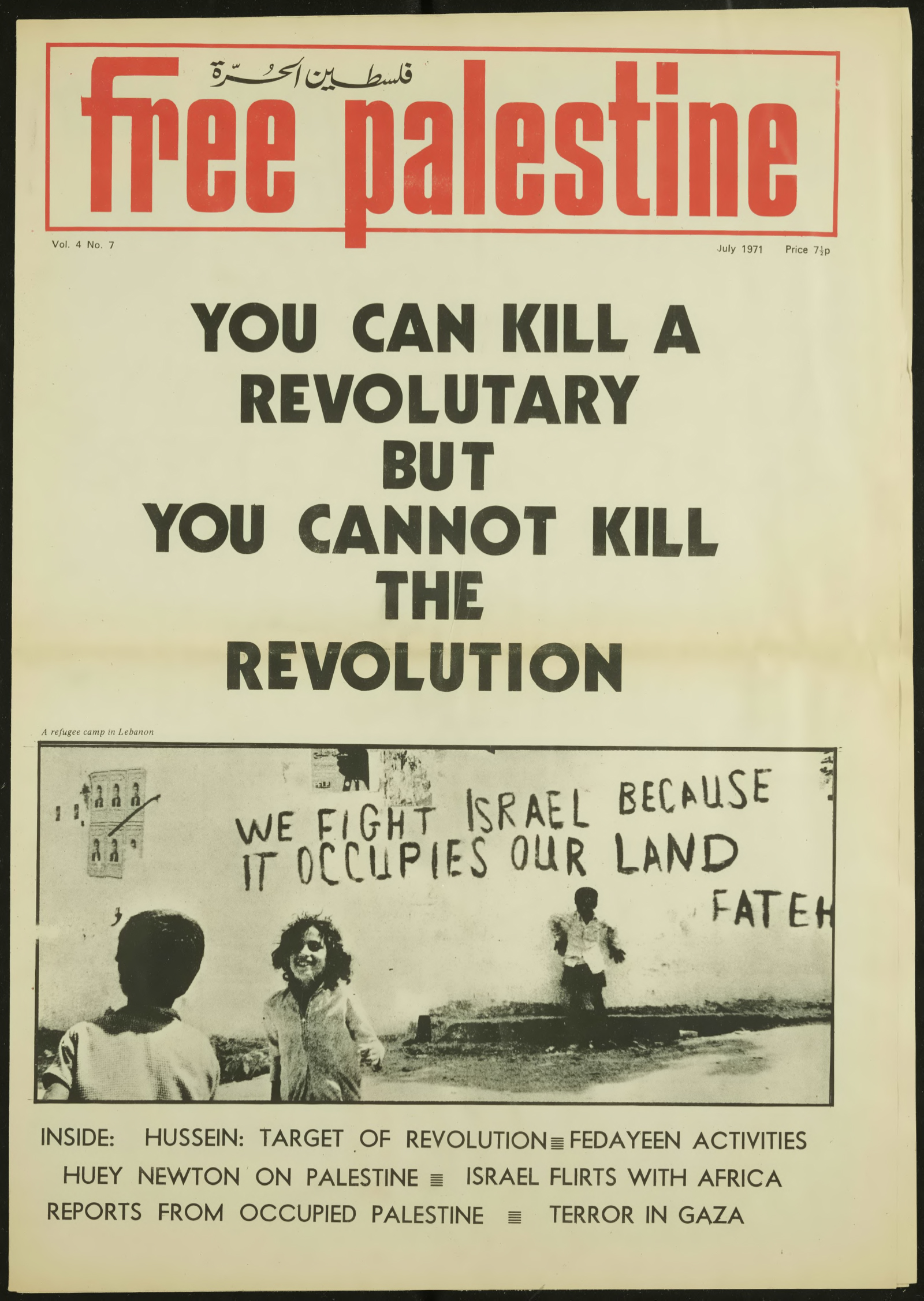
Free Palestine (July 1971)
The British Left, Labour Party and Parliamentary Support
Free Palestine’s issues consistently related news of support for Palestine amongst Members of Parliament and within various British political parties. This includes statements by MPs, party leaders and local branches, as well as criticising pro-Zionist statements and positions.
For example, the July 1971 edition of Free Palestine reported on a letter by eight MPs to the Israeli embassy in London objecting to Israel’s treatment of Palestinians. However such statements were the exception rather than the rule, with the leadership of the Labour Party routinely expressing support for Israeli colonialism (January 1974), appointing pro-Israeli MPs to senior party positions (April 1974), sacking pro-Palestinian MP Andrew Faulds and, in one instance, a senior Labour MP even ran a campaign to “purge two hundred Arab workers involved in North Sea exploration” on the premise they might be involved in espionage or sabotage (April 1974). However, the paper also relayed news of Zionist criticism of the new Labour government in May 1974 as a result of their ‘slight shift of policy’ by issuing a statement in support of a settlement which “provides for a personality for the Palestinian people”.
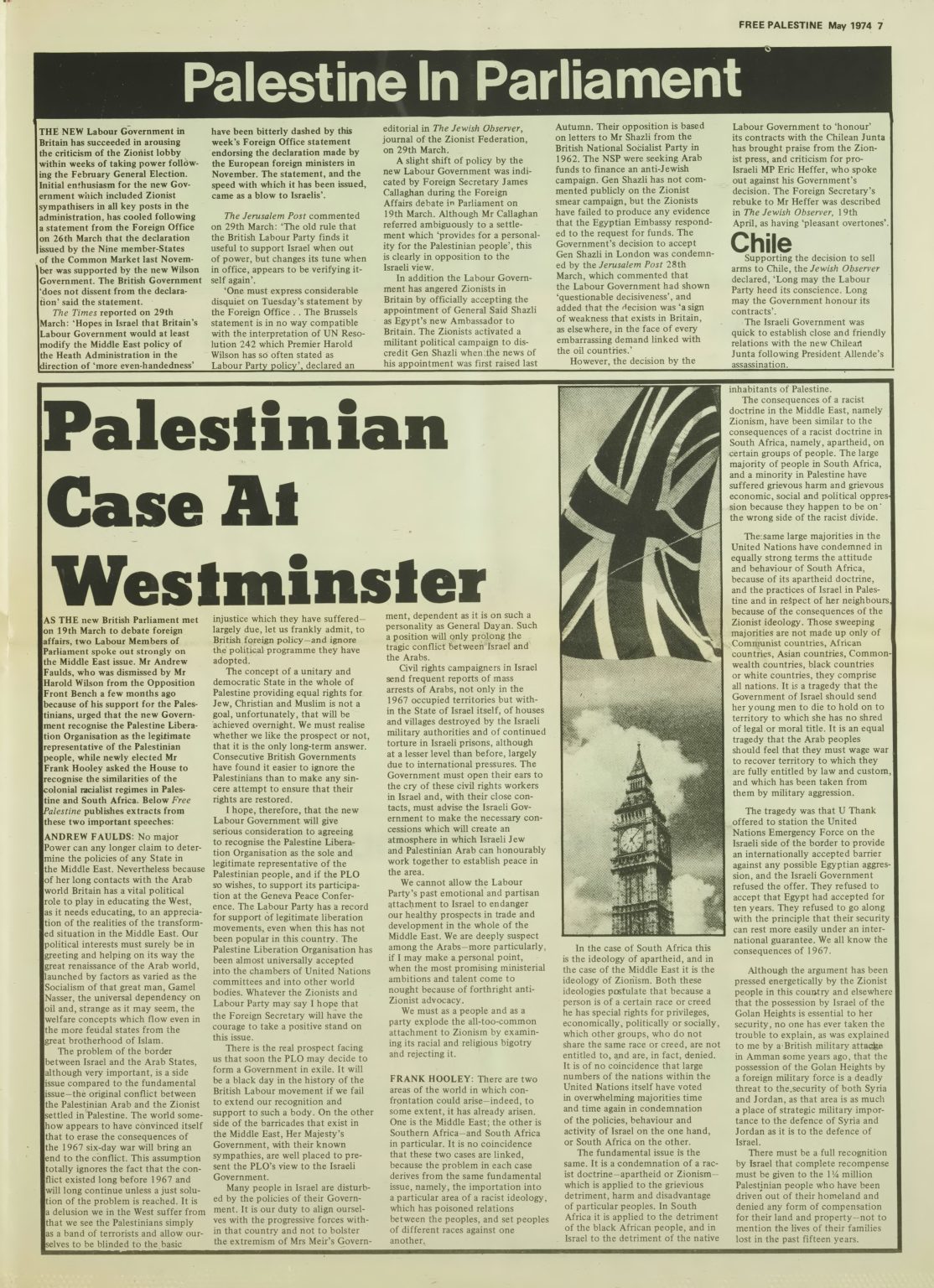
▴ A report on developments in relation to Palestine in the British Parliament. Free Palestine (May 1974)
Whilst the majority of parliamentary support was from the Labour Party, there were occasional interventions from Conservative MPs such Anthony Marlow MP who wrote glowingly of his meeting with PLO Chairman Yasser Arafat, in whom he saw many of the positive qualities of Margaret Thatcher. In remarkably forthright language he wrote that “The Zionist state of Israel is like a foreign body that has implanted itself in a living organism,” and that its replacement with an Arab Palestine was “a historic inevitably” (November 1980). The same issue reports on the establishment of the Conservative Middle East Council, attracting more than 40 Conservative MPs and Peers at its initial launch. This was followed by the establishment of the All-Parliamentary Group on Palestine, a cross bench initiative working (1981).
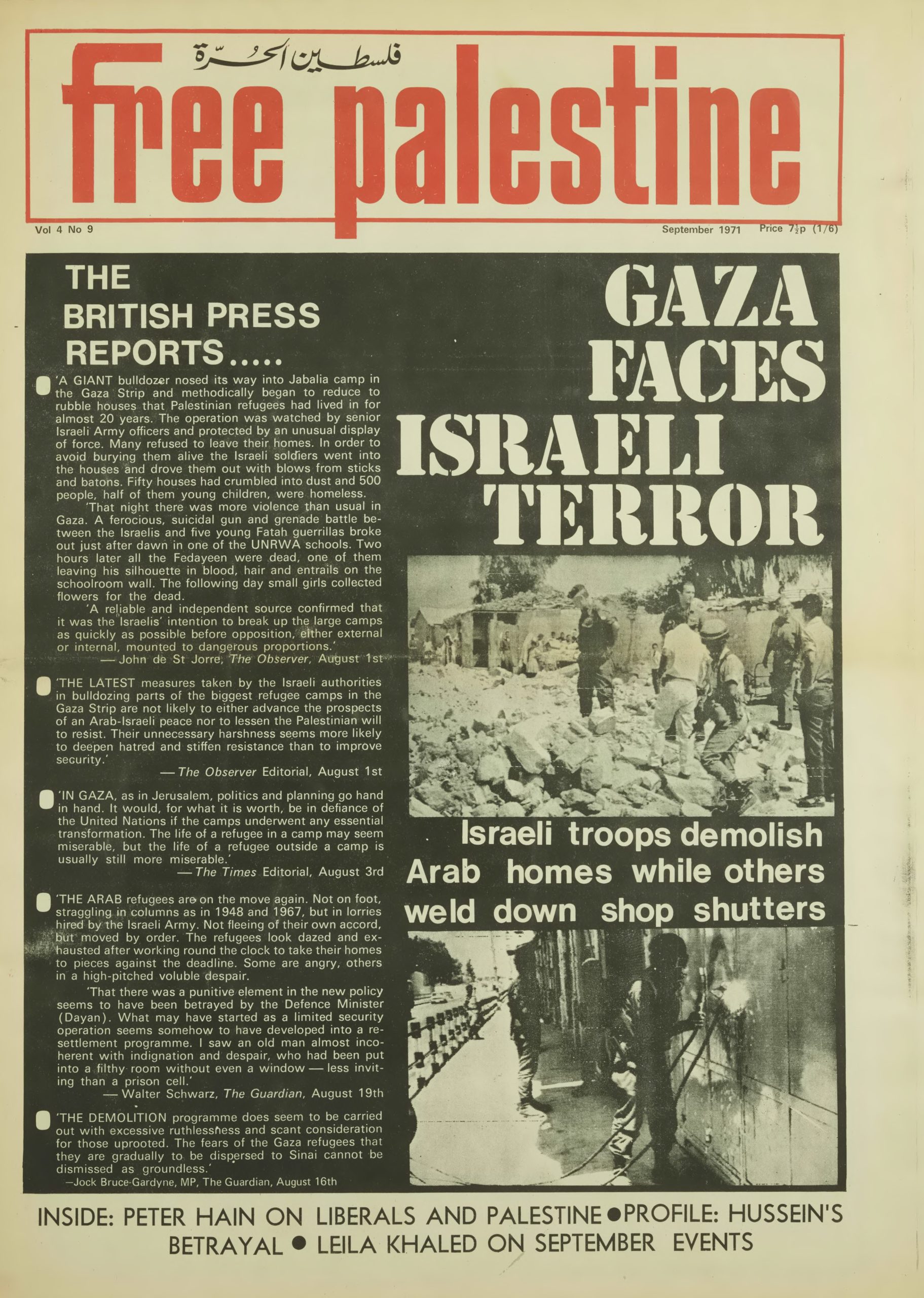
Free Palestine (September 1971).
More consistent and strong support was forthcoming from the Liberal Party. Peter Hain, chairman of the Young Liberals and later a Labour MP, wrote frequently in support of Palestine: “On the basic right of self-determination for the Palestinians there can be no compromise” (September 1971). By 1980 this had developed into a meeting between a delegation, led by Liberal Leader David Steel, and Yasser Arafat in Lebanon (November 1980), the first such meeting between a British parliamentary leader and the PLO Chairman. The delegation subsequently issued a statement, printed in the February 1981 issue, insisting that “No international settlement is either possible or just that does not recognise the rights of the Palestinian people” and calling for recognition of the PLO. Statements and articles from MPs appear regularly throughout several issues (November 1980; February 1981 and June 1981).
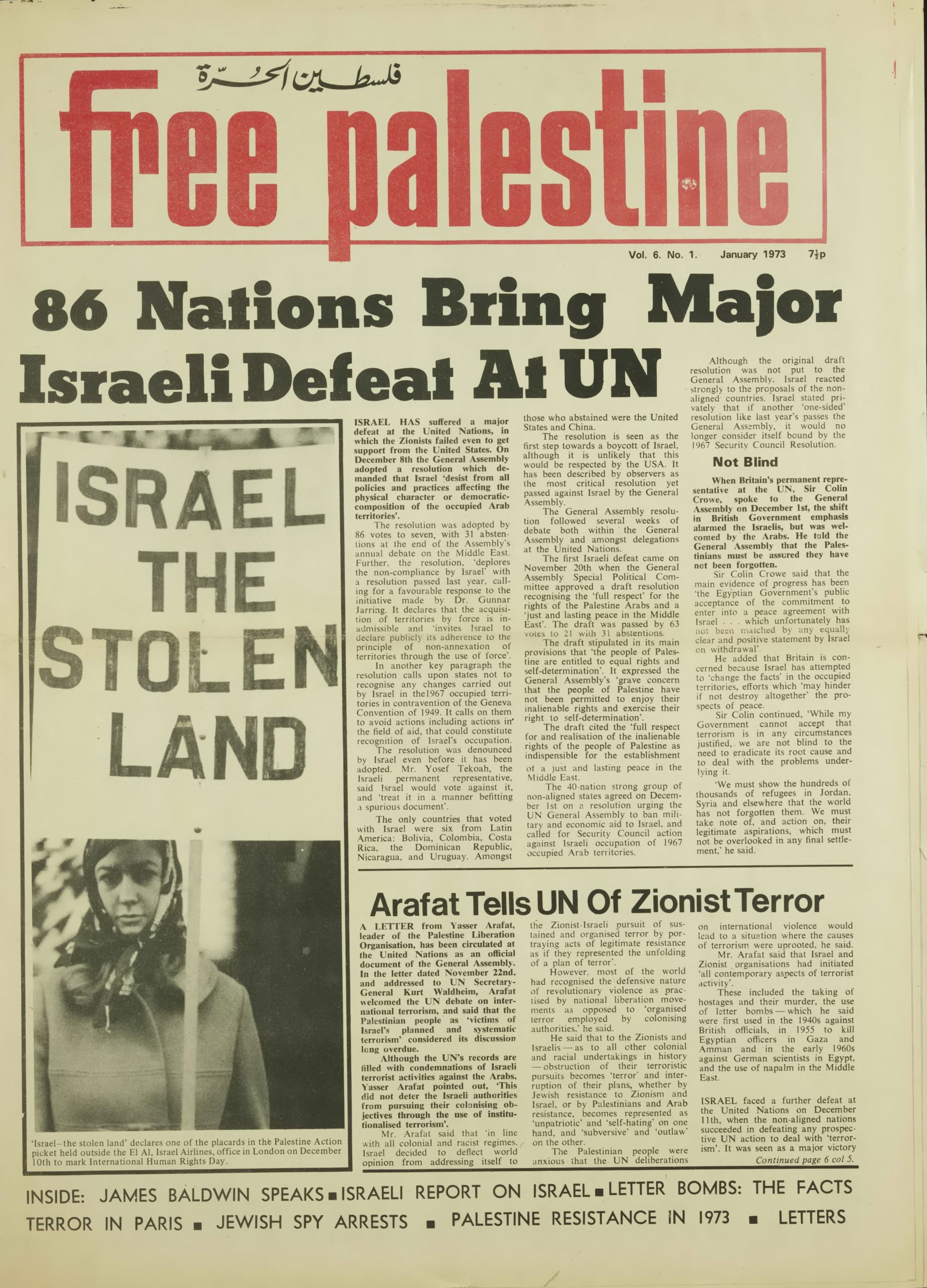
Free Palestine (January 1973)
The paper also reported on efforts by Zionist organisations to “restore their tarnished reputation in the Labour Party by turning history upside down and presenting Zionism as a liberation movement” (April 1973). Then, as now, part of the struggle inside the Labour Party was against pro-Zionist voices calling for two states that fell short of recognising the full rights of the Palestinian people, a position rejected by a reviewer of a Young Fabian pamphlet authored by Tony Klug (May 1973). For their positions, pro-Palestine MPs came under constant attack by their parties and pro-Zionist lobby groups (for example in June/July 1984).
Over the course of the magazine’s publication, there is a discernible shift in Palestinian demands, from a clear focus on the PLO’s call for a secular democratic state, to a more vague formulation. Concurrently, there is an increase in focus from popular and international demands, to giving attention to the positions of European and US governments, Israeli internal dynamics and – in Britain – on MPs and parliamentary politics.
Conclusion
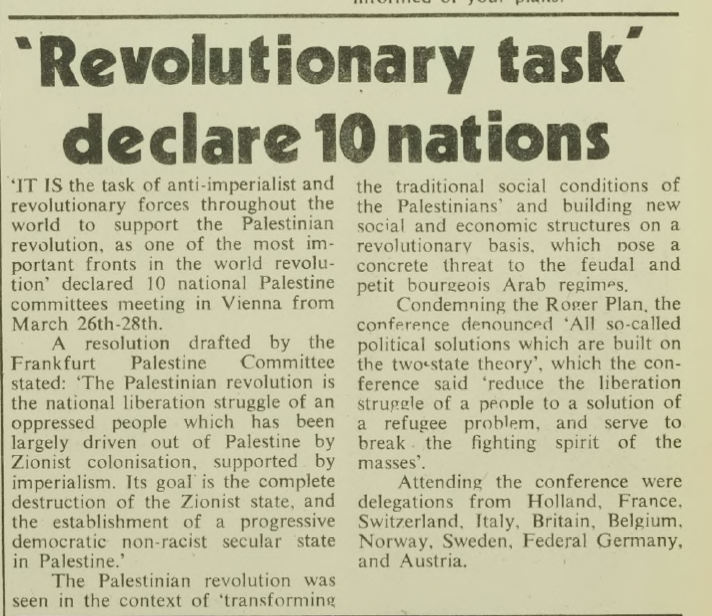
Free Palestine (April 1971)
Retrieving magazines such as Free Palestine opens us up to a lost, forgotten or at least often deeply buried world of international solidarity, and the connections, bonds, ideologies, practices and shared histories on which activists drew to globalise anticolonial praxis. Such retrievals are of particular importance, in the case of Palestine, where a lack of institutional archiving is compounded by active attempts to erase the Palestinian people, their history and their struggle. As part of its broader settler-colonial project, and now its genocide and scholasticide in Gaza, Israel has repeatedly looted and attempted to suppress Palestinian intellectual and cultural production.. Today, in Gaza, the same pattern continues, with students and academics murdered, books burned, universities bombed and entire knowledge systems targeted for destruction and erasure.
Yet these attempts at epistemicide are continuously confronted by an insurgent, anti-colonial, and revolutionary archive. This archive’s strength lies in its fragmentation, its refusal to either be erased or held in one place. Scattered across time and space – archived in homes, university libraries, community centres, student unions and across exilic networks – it waits to be revived, reprinted, reshared.
With the destruction and looting of institutional collections in Palestine, scholars, activists, and communities have increasingly turned to these materials, often produced/preserved by global solidarity movements. These archives, broadly conceived, do not replace Palestinian sources, but supplement them and help to mitigate the scattered and precarious nature of Palestinian archival materials. They contain within them evidence of exchanges, debates, travels, disagreements and shared interests – the many flows, connections and entanglements of solidarity that, when read in tandem with Palestinian historiography, can fill missing gaps and shed new light on the global history of the Palestinian Revolution.
Free Palestine is one example of this global archive whose language, and networks of circulation reflect the everyday infrastructure of solidarity rooted in student movements, grassroots campaigns, and broader anti-colonial networks. To return to Free Palestine today – in light of Israel’s genocide escalation – is not simply to remember or preserve it as a historical source but to reactivate it, allowing it to speak again, to inform and inspire the present. Much more than an anachronism, therefore, Free Palestine creates a sounding board for activists, against which to contrast the present stage of struggle.
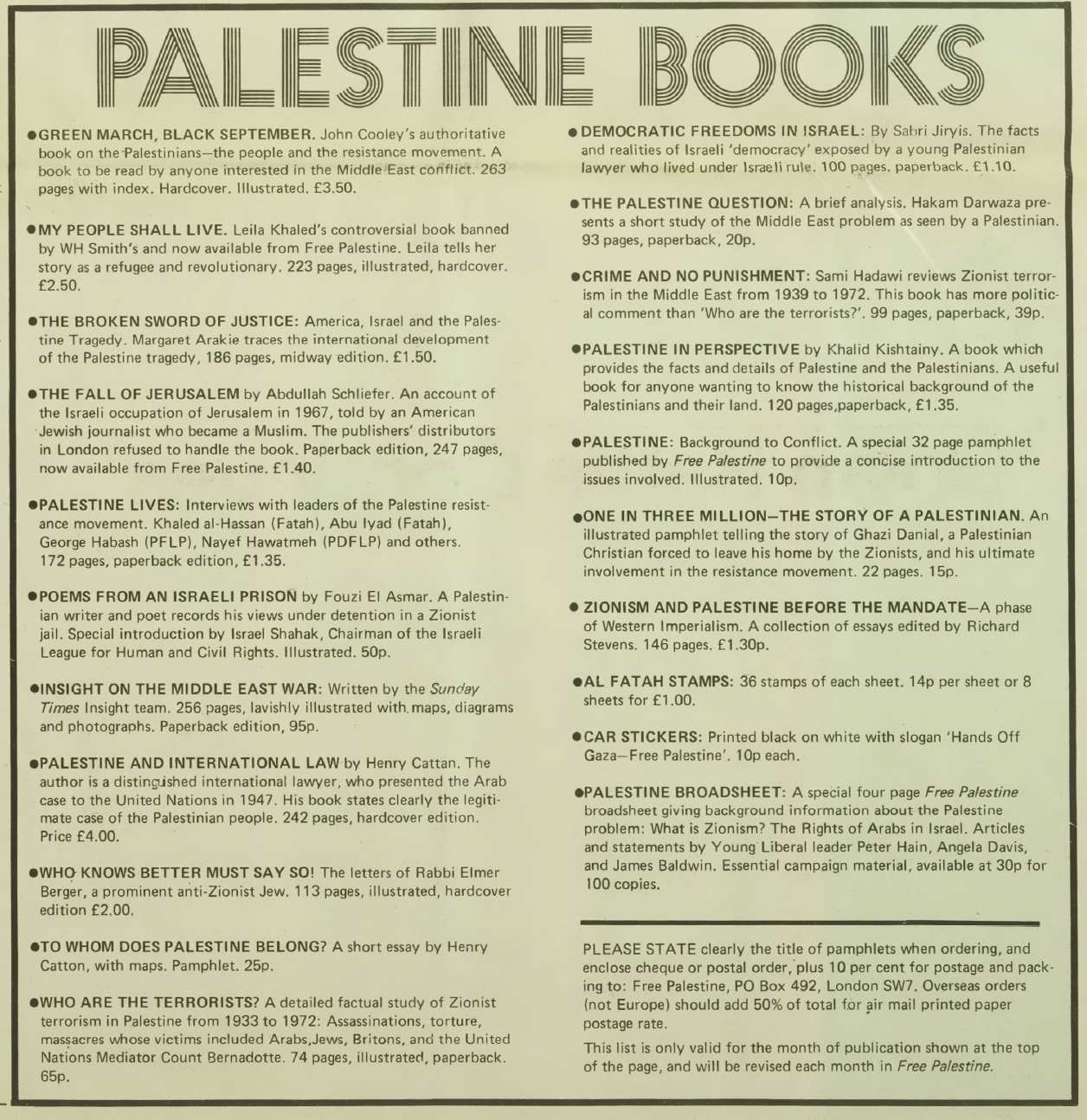
Free Palestine (May 1974)
Some sections of Free Palestine can be viewed as even simpler in their aims, to humanise Palestinians by explaining who they are, what has happened to them, their rights and their hopes for the future. Other parts repeat essentially banal facts of Western complicity, a chronicle of Israeli, British and US crimes, that the magazine was seeking to relay to its readers, teaching a Western audience its own history. In all these cases, repetition is a method of asserting truth and confronting erasure, a means of mass education to expose complicity, intervene in national and global politics and mobilise masses to speak up, act, organise and boycott.
After more than two years of a genocide, and in a moment when solidarity is again being criminalised, misrepresented, or silenced, to articulate the same simple messages against colonial murder can acquire a sense of futility. Yet what Free Palestine reminds us is that resistance is cumulative and that the archive disrupts linear historical timelines that seek to isolate past struggles from present ones. Its issues reveal the intimate and urgent entanglements between then and now, the unfinished work, the continuities and the same tactics used by those in power to repress and marginalise. Revisiting such material helps us interrupt the amnesia imposed by censorship, displacement and repression, and thereby transmit past struggles and hard-won lessons into the present.